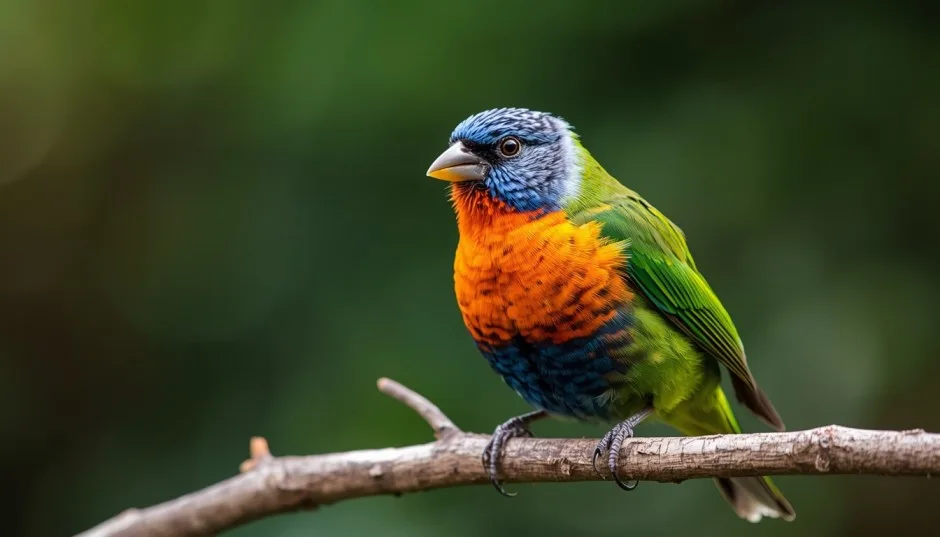
I spent three years trying to attract Indigo Buntings. Nothing worked. Then a birding moderator from Connecticut casually mentioned his setup in a forum post. Millet on a platform feeder. Thistle in a mesh tube. That was it.
The next spring, a male showed up. Bright blue. Singing from the top of my lilac bush. I nearly dropped my coffee.
Let me save you the three years of guessing. Here is exactly what works.
First, Make Sure You Are Actually Seeing an Indigo Bunting
A lot of people confuse Indigo Buntings with Blue Buntings. They look similar but live in different places. Blue Buntings stay mostly in Mexico and Central America. You might spot one near the Texas border, but that is rare.
Read Also: How Do Migrating Birds Know Where to Go? Explained
Indigo Buntings live across the eastern United States. From the Great Lakes down to Florida. From the Midwest over to the East Coast.
Here is the easiest way to tell them apart:-
| Feature | Indigo Bunting | Blue Bunting |
|---|---|---|
| Size | 4.7–5.1 inches | 5.1–5.5 inches |
| Male color | Bright blue, turns brownish in fall | Rich cobalt blue year-round |
| Female color | Uniform brown, maybe blue tinge on tail | Brownish-gray with hints of blue |
| Habitat | Open fields, woodland edges | Dense forests, thick undergrowth |
| Behavior | Sings from high perches, bold | Shy, stays low in bushes |
Indigo bunting bird images show males as brilliant blue in spring and summer. Females look like sparrows—brown with faint streaks on the chest.
The Best Feeder Type for Indigo Buntings
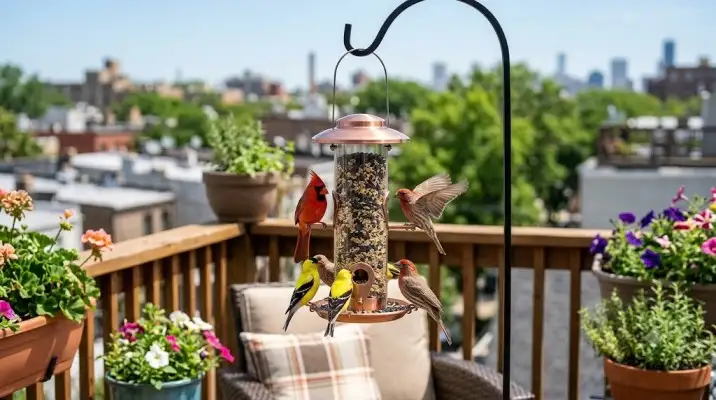
Forget the fancy nectar feeders. Indigos do not drink sugar water. Forget the suet cages. They do not eat fat blocks. The best bird feeder for indigo bunting is a platform feeder or a tray feeder.
Here is why. Indigo Buntings feed on the ground in the wild. They forage for seeds in low foliage and open areas. They feel safe when they can see their food spread out in front of them.
Platform feeders mimic that natural feeding style. A flat tray with a rim. Seeds scattered openly. No cages. No small ports to poke their heads into.
My setup: A wooden tray feeder mounted on a 4-foot post. I keep it about 15 feet from a large lilac bush. The bush gives them a quick escape route. The open tray lets them see approaching predators.
What About Tube Feeders?
Tube feeders work, but only with one modification. Indigo Buntings do not like clinging to mesh or small perches. They prefer to stand on a flat surface.
If you want to use a tube feeder, mount it on a platform base. Many tube feeders sell separate tray attachments. Or you can hang a mesh thistle feeder directly above a platform. The seeds that fall onto the platform attract the buntings.
A Connecticut birder reported success with exactly this method. He uses a tube feeder on a platform mount. The buntings eat the millet that lands on the tray.
The Hopper Feeder Option
Hopper feeders work too. These are the house-shaped feeders with a roof and a tray at the bottom. The key is the tray. As long as there is a flat surface for the birds to stand on, Indigos will come.
I tested a hopper feeder for two months. The buntings used it, but they preferred the open tray. The hopper felt too enclosed for their comfort.
The Seeds That Actually Attract Them
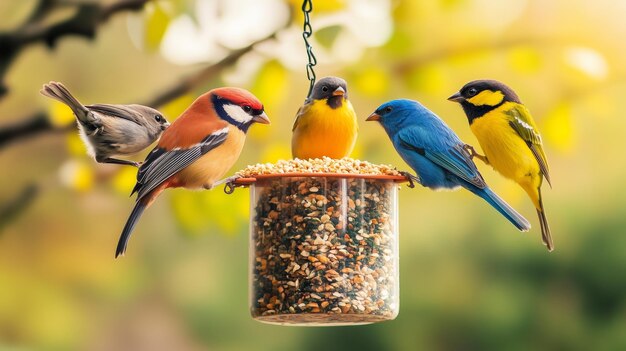
You can have the perfect feeder. If you fill it with the wrong seeds, no buntings will come.
The number one seed for Indigo Buntings is white millet.
Not the red milo you find in cheap birdseed mixes. White millet.
A Connecticut birding moderator watched an Indigo Bunting ignore everything else in his feeder and pick out every single millet seed. That is how much they love it.
The second best is Nyjer (thistle seed).
This is the tiny black seed you usually see in finch feeders. Indigo Buntings eat it readily. Use a mesh feeder for Nyjer so the small seeds can be accessed.
The third best is sunflower hearts and chips.
Remove the shells. Indigos have smaller bills than cardinals. They struggle with whole black oil sunflower seeds. The shelled version solves that problem.
The Seed Mix I Use (And Why It Works)
Here is my exact blend. I mix it in a 5-gallon bucket every two weeks.
-
40% white millet
-
30% Nyjer thistle
-
30% sunflower chips
I also scatter a handful of cracked corn on the ground below the feeder. Indigos eat cracked corn, especially in colder weather.
One warning: Avoid cheap mixes with red milo, wheat, or oats. Indigos will pick through them and leave the stuff you paid for. You end up with a feeder full of rejected seeds.
Feeder Placement: Where to Put It
You can have the perfect feeder and the perfect seed. If you put it in the wrong spot, the birds will never find it.
Put your feeder near cover. Indigo Buntings are shy. They want a quick escape route. Place the feeder within 10 to 15 feet of shrubs or small trees.
Keep it low. Indigos feed on the ground or in low foliage. A feeder mounted 3 to 5 feet high works better than one at 6 feet.
Face it toward open space. The feeder should have a clear view of an open area. Indigos like to see approaching predators from a distance. A feeder backed against a wall or dense trees feels unsafe.
My placement: Feeder is 4 feet high on a post. Fifteen feet away is a lilac bush. Twenty feet in the other direction is an open lawn. The buntings fly from the bush to the feeder, eat quickly, and fly back.
When Will They Come? Seasonal Timing Matters
Indigo Buntings are migratory. They do not stay year-round in most of the US.
Breeding season (April to August): They arrive in the eastern US and southeastern Canada around late April. Males return first. They stake out territories and start singing. This is your best chance to see them.
You Must Also Like: 2026 ABA Bird of the Year: The Ultimate Guide to Horned Lark Birdwatching Trips
Fall migration (September to October): They head south to Mexico, Central America, and the Caribbean. You might still see them at feeders, but less frequently.
Winter (November to March): They are gone from most of the US. Only southern Florida has wintering populations.
If you live in the Northeast or Midwest, put your feeder out by mid-April. Take it down? You do not need to. Other birds will use it. But do not expect buntings after October.
The One Thing I Learned from a Winter Sighting
I thought Indigo Buntings only came to feeders in spring and summer.
Then I read a post from a Connecticut birder. In February 2026, during bitter cold and snow cover, a "haggard-looking" Indigo Bunting showed up at his feeder.
The bird looked rough. Probably a young male that decided not to migrate. Or one that got delayed. The lesson? Keep your feeder filled all winter. You never know what might show up.
The same birder noted that birds face incredible pressure to survive during cold snaps. An extra feeder could save a life.
What Not to Buy: Three Wasted Purchases
I bought these. They did not work. Learn from my mistakes.
1. The "Bluebird" feeder with tiny holes. Marketed for bluebirds. Indigos cannot fit their heads inside. Useless.
2. The hanging mesh bag for sunflower seeds. Indigos hate clinging to unstable surfaces. They want solid footing. The bag swung in the wind. They ignored it.
3. The expensive "songbird blend" with dried fruit. Indigos do not eat much fruit. Wild berries in the fall, sure. Dried cranberries from a bag? No. Save your money.
Quick Comparison: Feeder Types Ranked
| Feeder Type | Works for Indigos? | Best Placement | Pros | Cons |
|---|---|---|---|---|
| Platform/Tray | Yes (Best) | 3-5 ft high, near cover | Mimics natural feeding, easy to clean | Seeds get wet in rain |
| Hopper with tray | Yes | 4-5 ft high | Protects seeds from weather | More expensive |
| Tube on platform | Yes | Mounted low | Good for Nyjer | Requires modification |
| Tube alone | No | Any | None for buntings | No flat surface to stand on |
| Mesh bag | No | Any | None for buntings | Unstable, swings in wind |
The Final Thoughts
Attracting Indigo Buntings is not complicated. It just requires the right setup.
Do this: Platform feeder. White millet and Nyjer. Near shrubs. Out by mid-April.
Do not do this: Tube feeders without trays. Cheap seed mixes with milo. Open areas with no cover.
I waited three years to see my first Indigo Bunting. He stayed for two days, ate half a pound of millet, and moved on. The next spring, three males showed up. They brought females. I watched them feed their fledglings in July.
That is the reward. Not just seeing a blue bird. Watching a family grow in your own yard. Set up your feeder this week. April is almost here. The buntings are on their way.