I found a golden-crowned kinglet on my patio three years ago. It was March. The bird was small. Smaller than my palm. It had hit my sliding glass door. I stood there looking at it for a long time. That morning I had been drinking coffee and watching chickadees at my feeder. I had no idea the glass was killing them.
I started searching online that same day. How to stop birds from hitting windows. That search led me to the American Bird Conservancy. I had never heard of them before. Now I read their emails every week.
Spring is here. Birds are migrating. They are nesting. They are showing up in our backyards. This year, the American Bird Conservancy is focusing on five key actions. These will impact the birds you see outside your door.
I've spent the past few months following their work. I’ve read their reports and chatted with folks in conservation. Here is what I learned.
5 Ways the American Bird Conservancy is Protecting Your Local Birds
1. They Helped Lock In Federal Funding for 2026
In January, Congress passed a spending bill. It was one of those big bipartisan things that does not make the news much. But inside that bill was money for the U.S. Fish and Wildlife Service. The US bird species conservation emergency lobbied for it.
Read Also: How Long Do Baby Birds Stay In the Nest?
I read the press release when it came out. Steve Holmer is their policy guy. He said something that stuck with me. Funding certainty lets agencies actually plan. They are not scrambling year to year.
That money goes to something called Joint Ventures. These are regional partnerships. They work on the ground. In 2025, the Northern Great Plains Joint Venture helped improve nearly 100,000 acres of grassland. That is not a number on a spreadsheet. That is actual land. Land where Long-billed Curlews nest. Land where Western Meadowlarks sing.
Why this hits close to home: I live near a grassland preserve. The birds I see there exist because people fought for funding years ago. The American Bird Conservancy is doing that fighting right now for the next generation of birds.
What to know: This is not glamorous work. They spend money on lawyers and lobbyists. That means less money for buying land. But if the funding does not get approved, all the land-buying in the world does not matter. It is a trade-off.
2. They Are Tackling Glass in Jacksonville Right Now
I treated my windows two years ago. I used Feather Friendly tape. It took me a Saturday afternoon. I have not found a dead bird on my patio since.
The American Bird Conservancy does this work at scale. Right now they are in Jacksonville, Florida. The Jaguars are building a new stadium. It will have acres of glass. The conservancy is meeting with the architects. They are showing them how to add bird-safe patterns to the glass.
Also in Jacksonville, the Museum of Science and History called them. The museum had bird strikes. The conservancy did a free assessment. They showed the museum where the problem spots were. The museum installed 250 square feet of markers.
What actually works: I learned this from their research. The pattern on glass needs to be dense. Two inches apart vertically. Four inches horizontally. Anything more spaced out and birds think they can fly through.
What does not work: I bought a pack of hawk decals from a garden center. I stuck them on my windows. A week later I found another dead bird. The decals were three feet apart. The bird just flew around them. I wasted twenty dollars.
What to do: Go to BirdSmartGlass.org. They list tested products. Acopian BirdSavers are cheap if you are handy. Feather Friendly tape costs more but looks cleaner. Do not buy the cheap stickers.
3. The Cats Indoors Thing
I used to let my cat outside. Her name is Juniper. She would sit on the porch. I thought she was just watching birds. Then I found a dead warbler on the doormat. She left it there like a gift.
I looked up the research. The American Bird Conservancy cites the 2.4 billion number. That is birds killed by domestic cats in the U.S. every year. I did not believe it at first. Then I read the studies. It is real.
They run a program called Cats Indoors. They do not support Trap-Neuter-Release. That was hard for me to accept because TNR sounds humane. But the released cats keep killing birds. There is no way around it.
In 2019 they polled 2,000 Americans. Most people agreed cats should be indoors. Most agreed with microchipping. The data showed we already know what the right thing is. We just do not do it.
What I did: Juniper now has a catio. It is a screened enclosure off my back door. She sits out there for hours. She watches birds. She does not kill them. She is also safer. Outdoor cats die young. Cars, coyotes, diseases. She is eleven now and still healthy.
What to do: If your cat goes out, transition them inside. It takes a few weeks. They will yowl at the door. They will get over it. Build a catio if you can. There are plans online. The American Bird Conservancy has a toolkit if you want to push your city for better ordinances.
4. Coffee and Birds
I did not know coffee had anything to do with birds. Then I read that most coffee is grown in the sun. To grow coffee in the sun, farmers clear forests. Those forests are where migratory birds spend the winter.
Tennessee Warblers. Baltimore Orioles. Wood Thrushes. They spend seven or eight months in Latin America. When the forests are gone, the birds are gone.
The bird conservancy of the Rockies backs something called Bird Friendly certification. It is run by the Smithsonian. It is the only certification I trust. Farms have to have shade cover. Multiple canopy layers. Native plants. They have to be inspected by a third party.
In Nicaragua, Bird Friendly farms have documented over 160 bird species. That includes Golden-winged Warblers, which are declining fast. Sun coffee farms nearby have almost none.
What I buy: I buy Birds & Beans coffee. It is the only brand I know that is fully Bird Friendly. It costs more. I pay about sixteen dollars a bag instead of ten. That extra money goes to farmers who keep the forest standing.
What to avoid: "Shade-grown" on a bag means nothing. I bought a bag labeled shade-grown from a grocery store. I emailed the company. They could not tell me where the beans came from. If it does not say Bird Friendly, you have no guarantee.
5. They Are Working on the Ground Near You
This part does not get headlines. But it is where the actual habitat gets restored.
In Northern New York, they are partnering with the Thousand Islands Land Trust. They are hosting workshops for landowners. They teach people how to manage forests for Golden-winged Warblers. The birds need shrubby clearings. Most landowners think clearings are messy. The workshops show them why messy is good.
In California, they are working on the Amargosa River. It is a desert river. They are restoring the riparian zone with the Amargosa Conservancy. That means planting native willows. Removing invasive plants. The birds come back.
In the Northern Great Plains, they have improved 600,000 acres of grassland over time. That is through partnerships with the USDA. They help ranchers graze cattle in ways that leave grass for birds.
What this means for you: If you own land, you can get help. The USDA Natural Resources Conservation Service has programs. They will pay for native plantings. They will pay for fencing to keep cattle out of streams. The American Bird Conservancy can connect you to the right people.
If you do not own land: Find your local Audubon chapter. They often work with the conservancy on local projects. I joined my chapter last year. They send emails when there are volunteer work days. Pulling invasive plants. Building nest boxes. It is not glamorous. But it is real work.
What I Have Learned to Avoid?
I have wasted money on things that do not work. Here is what I skip now.
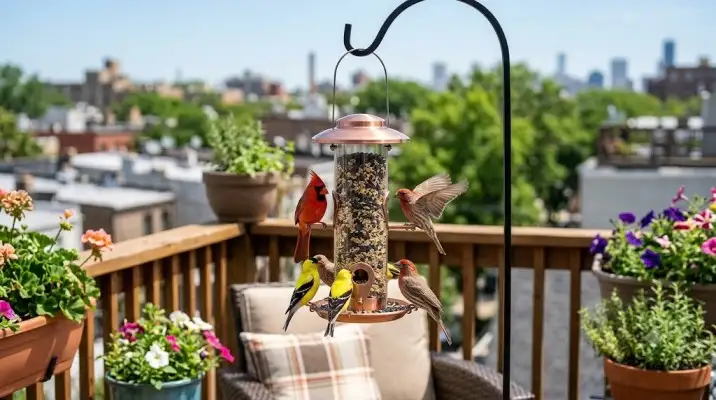
Bird feeders without window treatment. I did this. I put up a feeder and wondered why I kept finding dead birds. The feeder attracts them. The glass kills them. Treat the windows first. Then put up the feeder.
Cheap decals. I already mentioned this. Single stickers do nothing. They have to cover the glass with a dense pattern.
Letting cats out even a little. I thought letting Juniper out for ten minutes was fine. It was not. She killed birds in ten minutes. They do not need much time.
"Shade-grown" coffee without certification. I have seen this in grocery stores. It is marketing. Unless it has the Bird Friendly circle, do not trust it.
A Few Things I Have Noticed
I started paying attention because of one dead bird. Now I look at things differently.
I notice glass buildings when I drive through the city. I wonder if anyone has assessed them.
I notice neighborhood cats when I walk my dog. I wonder whose cat it is.
I notice coffee bags at the store. I flip them over to look for the Bird Friendly logo.
My windows are treated. My cat stays inside. I buy the right coffee. I turn off my outside lights at night during migration.
I am not saying I have saved any birds myself. But I have not found a dead bird on my patio in two years. That is something.
What You Can Do This Week?
You do not need to send money. You do not need to volunteer. Here are five things you can do in the next seven days.
Treat your windows. Go to BirdSmartGlass.org. Pick a product. Order it. Install it. It takes a Saturday.
Keep your cat inside. If your cat is already indoors, good. If not, start today. Keep the cat in for one day. Then two days. They will adjust.
Switch your coffee. Next time you run out, buy Bird Friendly. Birds & Beans is online. Some Whole Foods carry it. Pay the extra few dollars.
Turn off lights at night. Spring migration is happening. Birds fly at night. Lights confuse them. Turn off porch lights. Close blinds.
Get migration alerts. Some Audubon chapters send texts when big migration nights happen. I get them. When the alert comes, I turn off my lights.
The American Bird Conservancy started in 1994. They are not a big flashy organization. They do not go viral. They just keep showing up.
They work on glass. They work on cats. They work on coffee. They work on federal funding. They work on habitat. This spring, the birds outside your window are migrating through a landscape that this organization is making safer.
You do not have to do everything. Just pick one thing. Treat one window. Keep your cat inside for one day. Buy one bag of Bird Friendly coffee.
Small things. Lots of people. That is how it works.