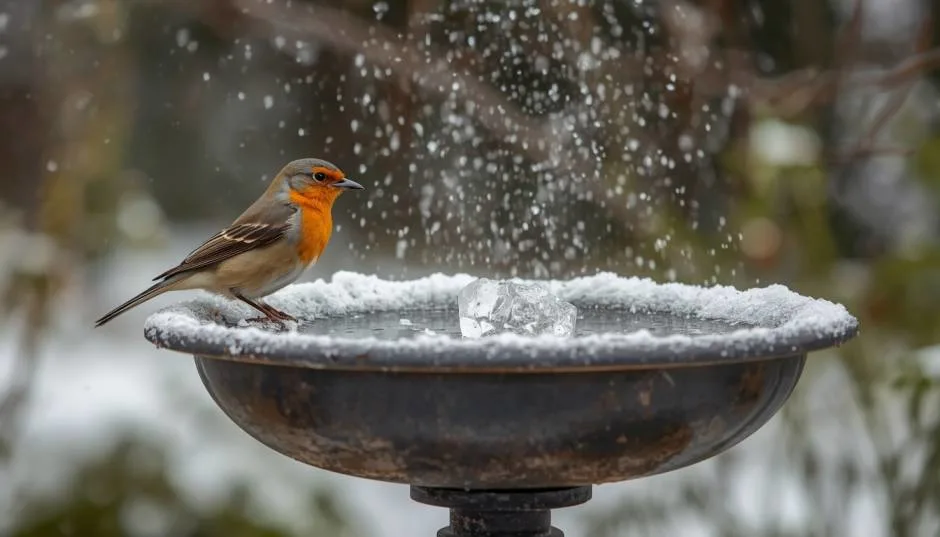
Last January I watched a robin land on my frozen bird bath. It pecked at the ice for ten minutes. Then it flew off thirsty. That image stuck with me. Birds need water in winter just as much as food.
But finding liquid water when everything freezes is nearly impossible for them. So I started researching heated bird baths. I tested options. I read reviews. I made mistakes.
This guide shares what I learned about choosing the right heated bird bath for winter.
Why Birds Need Water in Winter?
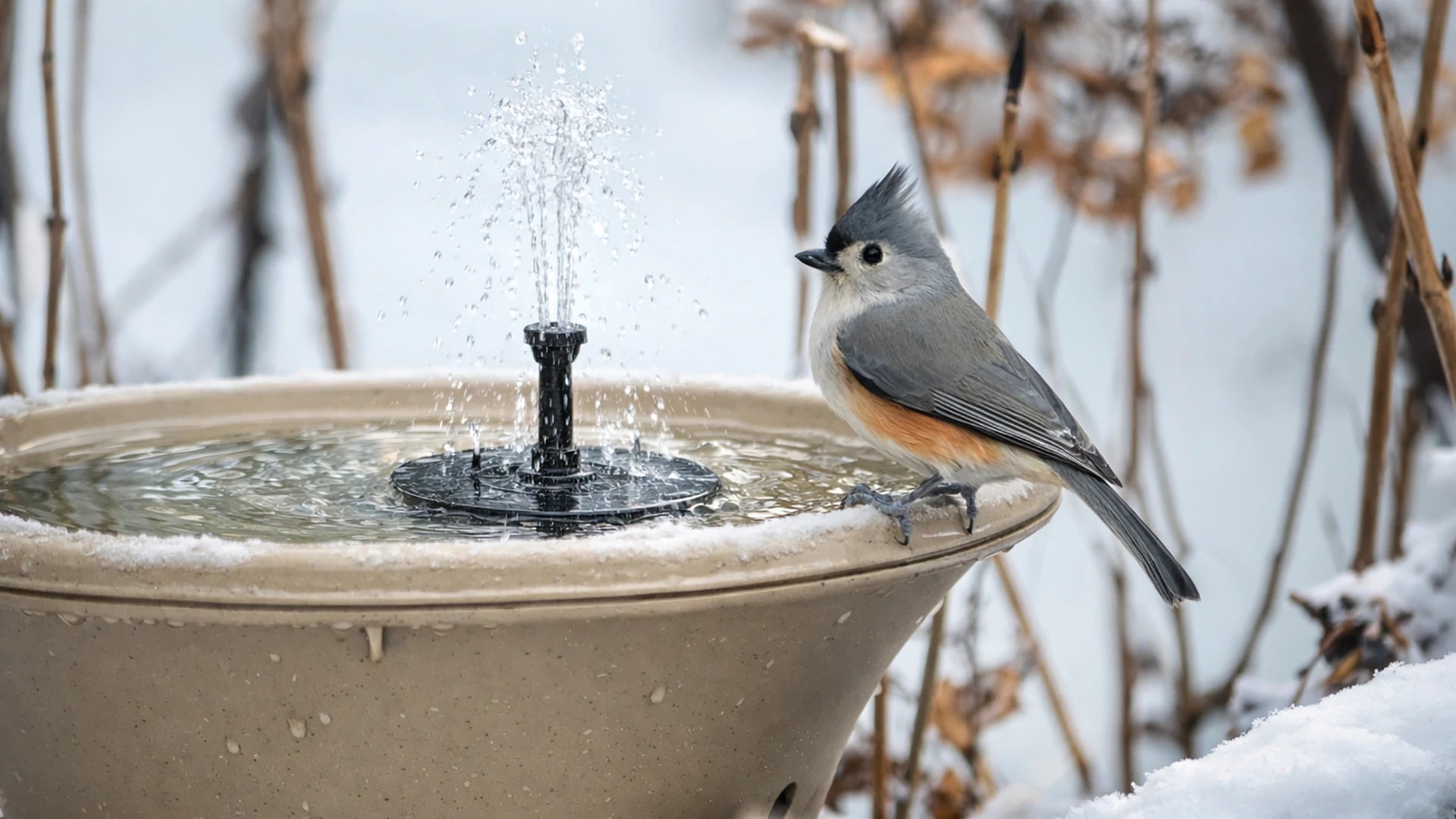
You might think birds get enough water from snow. They don't. Eating snow costs energy. Birds burn precious calories melting it in their bodies.
Read Also: Safe Cleaning for Bird Baths During H5N1 Risk
Water helps birds stay warm. They fluff their feathers to trap air. Clean feathers insulate better. Birds need water to keep those feathers in shape.
A heated bird bath keeps water just above freezing. Not warm. Just liquid. That's enough.
Heated Bird Bath vs. De-Icer: What's the Difference
You have two main options. A heated bird bath has a built-in heating element. A de-icer is a separate device you drop into your existing bath.
Heated bird baths cost more. Prices run $50 to $150. But they look cleaner. The heating element hides inside the unit. De-icers cost less. Most run $20 to $40. They work with baths you already own. But the cord is visible. They look functional, not pretty.
I chose a de-icer for my concrete bath. The cost was lower. The setup took two minutes.
The Solar Question: What You Need to Know?
Many people search for solar heated bird baths. I did too. Here's the honest truth.
Most "solar heated" bird baths are not heaters. They are solar fountains. The solar panel powers a small pump. The pump moves water. Moving water freezes slower than still water.
You Must Also Like: How to Join the 2026 Great Backyard Bird Count for Beginners?
That works in mild winters. But when temperatures drop below 14°F, solar pumps fail. The water freezes. The pump can break.
True solar heating exists. But it requires a battery bank and a large panel. That's an engineering project. Not a product you buy off the shelf.
If you live in a cold climate, skip solar. Buy electric. It works every time.
What Wattage Do You Need
Wattage matters. Too low and the water freezes anyway. Too high and you waste electricity.
Here's my rule of thumb. For mild winters (above 20°F), a 44-watt de-icer works fine. For moderate cold (0°F to 20°F), go with 75 watts. For brutal cold (below 0°F), use 80 watts or more.
Most quality de-icers have thermostats. They only run when needed. My 50-watt unit cycles on and off. It uses about 10 to 20 cents of electricity per day.
Materials That Survive Winter
Not all bird baths handle freezing well. The material matters.
Plastic and resin are your best bets. They don't crack when water freezes. They're lightweight. They're cheap. Concrete and stone look beautiful. But they crack. Water seeps into tiny pores. It freezes. It expands. Cracks grow bigger each winter.
Ceramic and glass? Avoid them in cold climates. They shatter easily.
I learned this the hard way. My ceramic bath cracked after one hard freeze. The plastic one I bought as a replacement has lasted three winters.
Placement Makes a Difference
Where you put your bird bath matters as much as what you buy.
Put it in full sun. Dark surfaces absorb heat. This helps keep water liquid longer. Block it from wind. Wind steals heat. A spot near a wall or hedge helps.
Trending Post: 7 Essential Winter Bird Feeding Tips You Need to Know
Keep it shallow. Deep water takes longer to freeze. But birds need shallow baths. Three inches is the maximum depth for safety.
Add rocks or sticks. Birds need an escape route. A perch helps them climb out.
Safety Rules You Cannot Ignore
Heated bird baths use electricity. Water and electricity are dangerous together. Follow these rules.
Always use a GFCI outlet. This cuts power instantly if something shorts. Never plug a heated bath into a standard outlet. Use outdoor-rated extension cords. Indoor cords crack in cold. They become fire hazards.
Keep water temperature low. Heaters should keep water at 40°F to 50°F. Hot water burns birds' feet. It can also crack your bath. Never add antifreeze or salt. These are toxic to birds. They will kill them.
Check cords regularly. Look for cracks or damage. Replace damaged cords immediately.
The Tennis Ball Trick (And Its Limits)
You may have heard about floating a tennis ball in your bird bath. The ball moves in the wind. It breaks up ice as it forms. This works in mild freezes. It's free. It's simple. But it fails in hard freezes. And the ball can grow bacteria.
I use a tennis ball in my backup bath. It helps. But I don't rely on it alone.
What I Actually Recommend?
If you already have a bird bath you like, buy a de-icer. The K&H 80-watt thermostatic model works well. It's safety-listed. It looks like a rock. It runs only when needed.
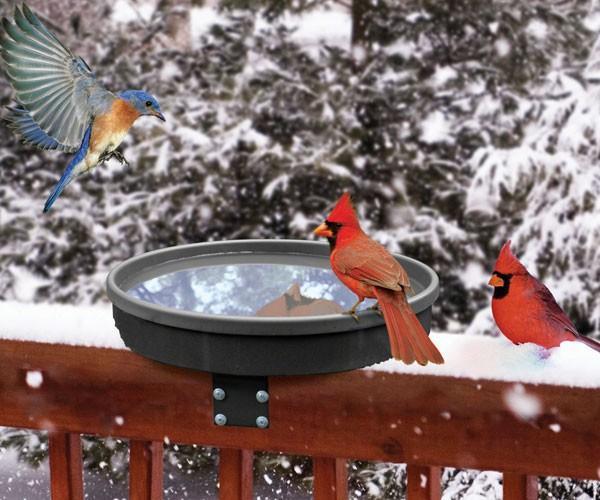
If you need a complete setup, buy a heated bird bath. The Allied Precision 20-inch model is popular. It has a built-in heater. It mounts on a deck rail or pedestal.
If you live where winters are mild, try a solar fountain first. It circulates water. It delays freezing. It costs less. Just bring it inside before hard freezes hit.
Maintenance Matters
Heated bird baths still need cleaning. Algae grows slower in cold. But it still grows.
Dump and scrub the bath every week or two. Use a mild detergent. Rinse thoroughly. Clean with vinegar water. One part vinegar to nine parts water works well. It kills bacteria without harsh chemicals.
Check the water level daily. Evaporation happens even in winter. Low water can damage the heater.
The Final Thoughts
The best heated bird bath for winter depends on your setup. If you have an existing bath, buy a de-icer. It's cheaper. It works. If you're starting fresh, buy a heated bath. It looks better. It's easier to use.
Skip solar unless your winters are mild. Skip concrete and ceramic unless you want cracks. Skip salt and antifreeze always. Place the bath in sun. Block the wind. Add a rock for birds to perch on. Clean it weekly.
A heated bird bath turns your yard into a winter refuge. Birds will find it. They will remember it. And you will watch them drink when everything else is frozen solid.