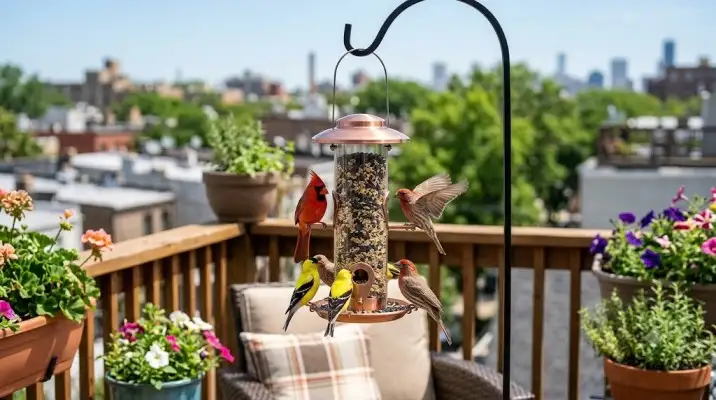
A balcony bird feeder turned my tiny eighth-floor ledge into a daily wildlife show. Sparrows, bulbuls, and the occasional sunbird now visit every morning. I started with a cheap plastic tray. Big mistake. Seeds scattered everywhere. Pigeons muscled in. The mess took longer to clean than the birds took to eat.
Then I switched to a proper feeder. Everything changed. The right design keeps seed dry, stops bigger birds from bullying the small ones, and makes cleaning quick.
This guide shares what I learned. You'll find the best feeder types for apartments, hanging tips that won't break building rules, and a cleaning routine that takes five minutes.
Why Balcony Feeding Is Different?
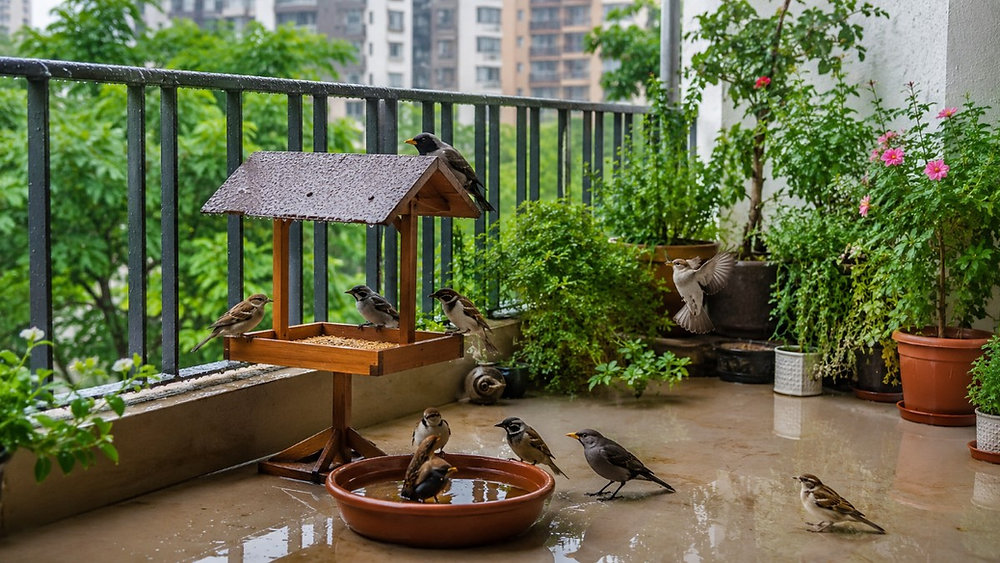
Balcony bird feeding comes with challenges that backyard feeders don't face.
Space is tight. You can't hang a giant hopper. Wind hits harder up high. Dropped seed falls onto your neighbour's balcony below. Building rules may restrict what you can attach to railings or walls.
Read Also: Best Plants for Hummingbird Conservation in Your Backyard
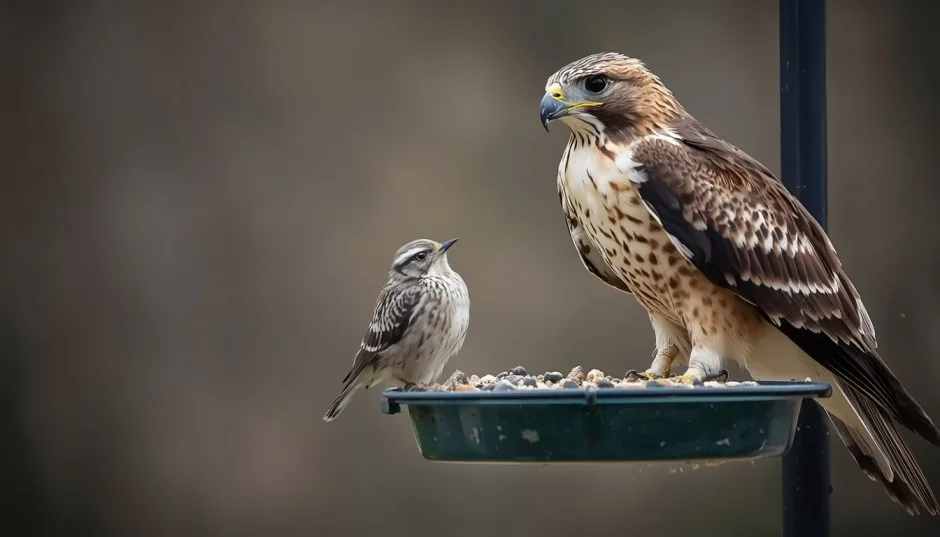
Pigeons and crows learn fast. They scare off smaller birds and empty a feeder in minutes. A poorly chosen bird feeder on apartment balcony setups attract the wrong crowd.
The good news? A few smart choices solve these problems. The right feeder, the right location, and the right seed mix make balcony feeding clean and rewarding.
Best Feeder Types for Small Spaces
Tube Feeders
Tube feeders work brilliantly on balconies. They're compact. They hang from a single hook. They keep seed dry inside a plastic or metal tube.
Small ports with perches suit finches, sparrows, and tits. Larger birds can't land on the short perches. That's a feature, not a bug. It keeps bullies away.
Choose a tube with metal ports. Plastic ports crack in strong sun. A metal mesh around the tube also lets clinging birds like woodpeckers feed.
Downside: You need to clean tubes often. Wet seed clumps inside and grows mould fast.
Window-Mounted Feeders
These attach directly to your balcony glass or railing with suction cups or brackets. They bring birds incredibly close. You can watch from inside without moving.
They're perfect for renters. No drilling. No permanent fixtures. Some models use strong suction cups rated for several kilos.
Downside: Suction cups fail in extreme heat. Check them weekly. A fallen feeder means lost seed and a mess below.
Hopper Feeders
Hopper feeders hold a lot of seed. They suit lazy weekends when you don't want to refill daily.
But they're bulky. They catch wind on high floors. And they attract bigger birds unless you pick a small model with short perches.
Best for: Larger balconies with a solid wall to mount on.
Suet Feeders
Suet cakes attract insect-eating birds. Think woodpeckers, nuthatches, and warblers. They hang from a simple cage.
Suet melts in summer heat. Use no-melt suet cakes in warm months. In winter, standard suet works fine.
Downside: Messy in heat. Skip suet if your balcony gets full afternoon sun.
How to Hang a Bird Feeder on a Balcony?
This is where most people get stuck. You can't drill into building walls. Railing clamps may violate society rules. Here are practical options that work.
Railing Hooks
Over-the-railing hooks need no tools. They clamp onto the railing top. Most adjust to fit different rail widths. Check your building rules first. Some societies ban anything attached to railings. Ask before buying.
Telescopic Poles
A freestanding pole with a base plate works if you have floor space. Some clamp to the railing base. Others use a weighted stand.
You Must Also Like: How Long Do Baby Birds Stay In the Nest?
These keep feeders away from the railing itself. That reduces mess on the railing and below.
Ceiling Hooks
If your balcony has a concrete ceiling, adhesive hooks offer a no-drill option. Heavy-duty versions hold several kilos.
Clean the surface first. Let the adhesive cure for 24 hours before hanging anything. In humid cities, check the hook monthly.
Suction Cup Mounts
Window and glass-mounted feeders use industrial suction cups. They hold well on clean, smooth glass. Rough or dirty surfaces cause failures.
Press firmly when installing. Remove and re-seat the cups every few weeks.
Safety Check
Whatever you use, test it with a weight before adding seed. A feeder falling eight floors down is dangerous. Secure the hook. Check the clamp. Then hang.
Where to Place Your Feeder?
Position matters as much as the feeder itself.
Near cover: Birds need escape routes. Place the feeder near a wall or a potted plant. They'll approach with more confidence.
Away from the railing edge: Seed and droppings fall straight down. Move the feeder inward so waste lands on your own balcony floor. Easier to sweep.
Sheltered from wind: High floors catch strong gusts. A corner spot protects the feeder and keeps seed inside.
Visible from inside: Half the joy comes from watching. Place it where you can see it from your sofa or kitchen.
Avoid glass collisions: If birds see through to another window, they may fly into the glass. Move feeders close to the glass or add decals.
What to Feed?
Seed choice determines which birds visit.
Small seeds: Millet, canary seed, and niger attract finches, sparrows, and munias. These suit tube feeders.
Sunflower hearts: No shells. No mess. Almost every small bird loves them. Slightly pricier but worth it.
Mixed seed: Cheap but wasteful. Birds toss what they don't want onto the floor.
Avoid: Bread, rice, and salty snacks. These harm birds. They also attract rats and pigeons.
Water: A shallow bowl of clean water helps birds in summer. Change it daily to stop mosquitoes breeding.
How to Clean Bird Poop Off Balcony?
This question comes up in every balcony feeding group. Droppings are part of the deal. But you can manage them.
Daily: Sweep or vacuum dry droppings. A small brush and dustpan work fine.
Weekly: Wash the floor with soapy water. A mild disinfectant kills bacteria. Avoid harsh chemicals near feeders.
Under the feeder: Place a washable mat or tray below. It catches seed husks and droppings. Rinse it weekly.
Railing stains: Wipe immediately. Fresh droppings come off easily. Dried ones stain paint and metal.
Feeder hygiene: Clean feeders every two weeks. Use hot soapy water. Rinse well. Dry fully before refilling.
Dirty feeders spread disease. Sick birds visit, and infections pass through shared surfaces. Regular cleaning protects the birds and keeps your balcony usable.
Attracting the Right Birds
Not every bird is welcome. Pigeons and crows dominate if you let them.
Use small perches: Short perches suit small birds. Pigeons can't balance on them.
Choose enclosed feeders: Caged feeders let small birds in but block larger ones. These work wonders in pigeon-heavy areas.
Avoid ground feeding: Never scatter seed on the balcony floor. That invites pigeons, rats, and squirrels.
Offer the right food: Pigeons love grains and bread. Small birds prefer niger, sunflower hearts, and millet.
Be patient: New feeders take one to three weeks to attract regular visitors. Once birds find it, they return daily.
Common Mistakes to Avoid
Buying the cheapest plastic feeder: It cracks in sun. Ports break. You replace it within months.
Hanging too high or too low: Too high means birds can't see it. Too low invites cats and rats.
Skipping cleaning: Mouldy seed makes birds sick. It also smells.
Using mixed seed with fillers: Most of it ends up on the floor. Buy specific seeds your target birds eat.
Ignoring building rules: Some societies fine residents for balcony mess. Check before installing anything.
Quick Buyer's Guide for Bird Feeder On Apartment Balcony
| Feeder Type | Best For | Avoid If |
|---|---|---|
| Tube feeder | Small birds, tight spaces | You hate frequent cleaning |
| Window-mounted | Renters, close viewing | Glass gets extreme heat |
| Hopper | Larger balconies | High wind exposure |
| Suet cage | Winter, insect-eaters | Balcony faces full sun |
| Caged feeder | Pigeon-heavy areas | You want larger birds too |
Final Thoughts
A balcony bird feeder brings nature into small urban spaces. Pick a feeder suited to your space. Hang it securely. Place it wisely. Feed the right seed. Clean regularly. Sweep daily. Wash weekly. Your balcony stays tidy. The birds stay healthy.
The first visitor feels magical. The tenth feels routine. That daily parade of small birds becomes part of your morning. Worth every seed and every sweep.