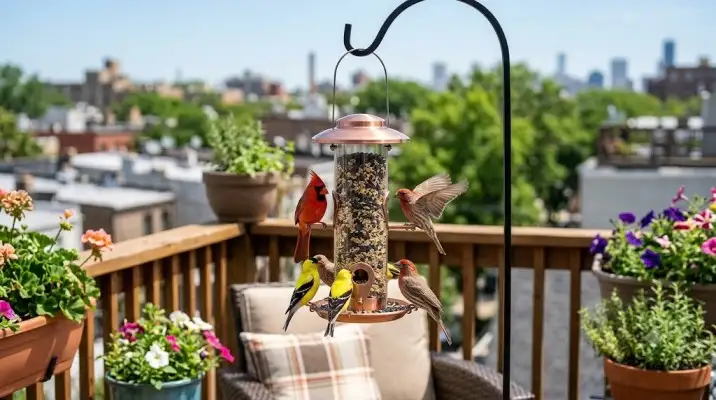
I started watching birds in my backyard three years ago. I did not know the science behind it. I just noticed I felt calmer after ten minutes on my porch with a cup of coffee. That feeling is not imaginary.
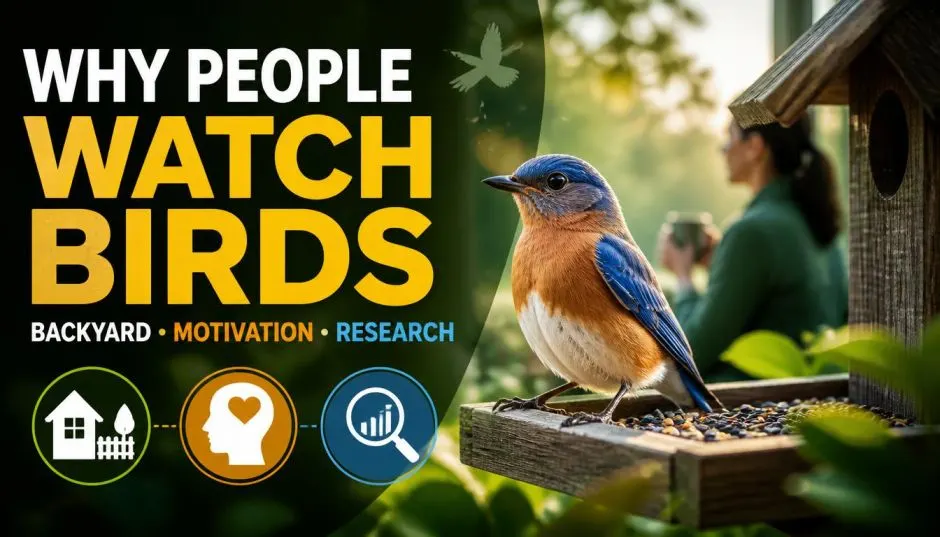
Researchers have spent years studying birds backyard motivation research, and the findings explain why so many people find peace in watching a robin hop across the lawn.
The numbers are staggering. Nearly 59 million Americans feed and watch birds. In the UK, people spent £210 million on bird food in a single year. Something is driving this behavior.
The research points to three main motivators: psychological benefits, a sense of moral responsibility, and a deep desire to connect with nature.
What the Research Actually Shows?
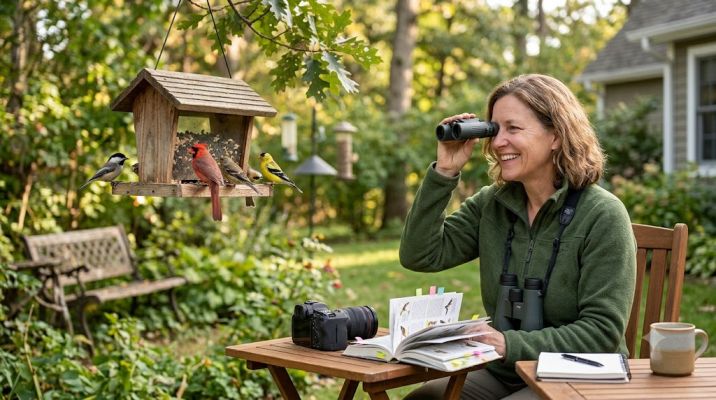
A Virginia Tech study surveyed over 3,600 participants in Project FeederWatch. By the end of a six-month period, 95% of participants reported that feeding and observing birds positively affected them. Only 55% said other life events had a positive effect during the same time.
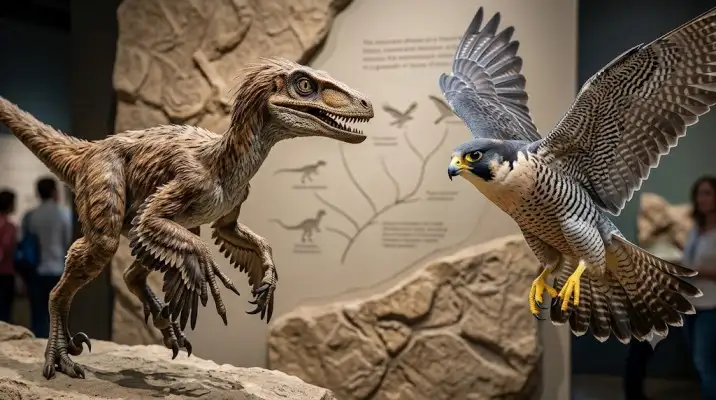
Read Also: Are Birds Dinosaurs? How Birds Evolved From Dinosaurs?
That gap matters. Birdwatching is not just a pleasant distraction. It actively improves how people feel about their lives.
Another study measured wellbeing and anxiety before and after a 30-minute birdwatching session. Both groups showed improved wellbeing and reduced anxiety.
But the group that rated their joy on seeing each species had the greatest decrease in anxiety. The active engagement with positive emotion amplified the benefit.
The Three Core Motivations
Psychological Wellbeing
The most consistent finding across studies is that birdwatching makes people feel better. Participants describe feelings of relaxation, happiness, and stress relief.
One study found that areas with more birds in the afternoon were associated with lower levels of stress, anxiety, and depression in the local community.
Here is what surprised me. It is not the number of different species that matters. It is the total abundance of birds. Seeing more birds of any kind produces the positive effect. You do not need rare species to feel better. A flock of sparrows will do.
Moral Responsibility
Many people feed birds because they feel a duty to help them survive. Research highlights that conservation benefits are a key motivator. In urban landscapes where green space is shrinking, gardens offer a chance to make a difference.
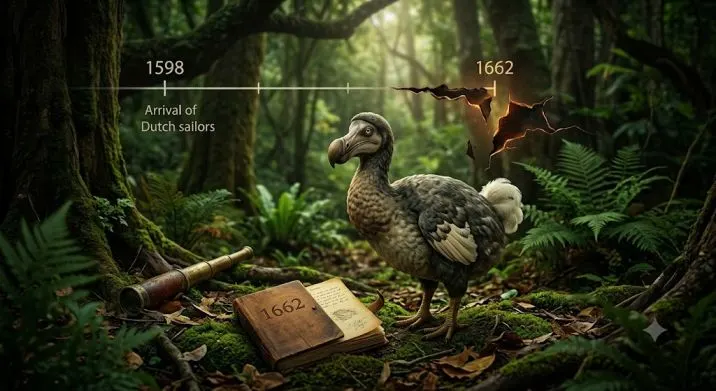
You Must Also Like: When Did the Dodo Bird Go Extinct? 1662 Explained
This motivation intensifies with age. Older adults are more likely to feed birds regularly. They see it as a small act of stewardship in a changing world.
Connection to Nature
People who feed birds report feeling closer to nature. That connection has measurable benefits. Studies show that spending time in natural surroundings helps people relax and unwind from demanding lifestyles.
The bird-feeding relationship is reciprocal. Humans provide food. Birds provide a window into the natural world. That exchange creates meaning.
Why Some Birds Bring More Joy Than Others?
Not all birds are equal in the eyes of backyard watchers. Research shows clear preferences.

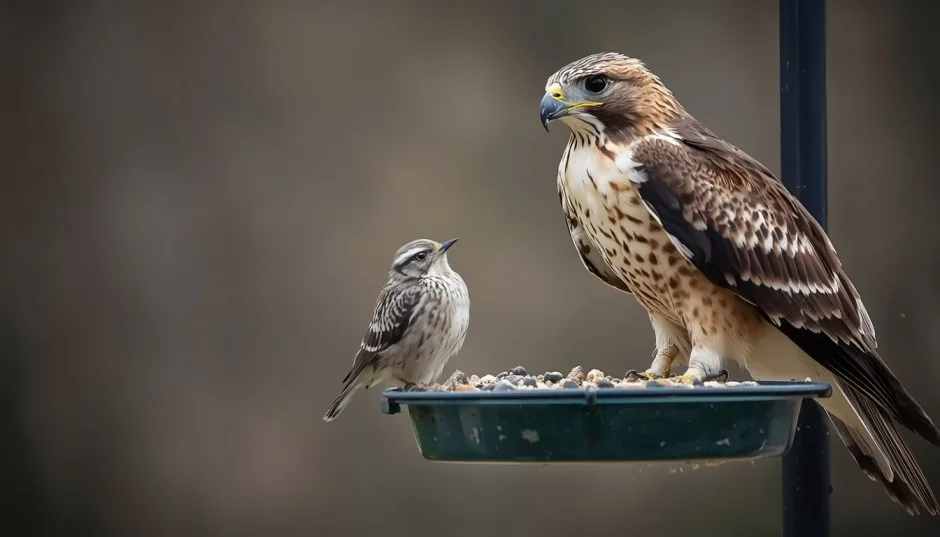
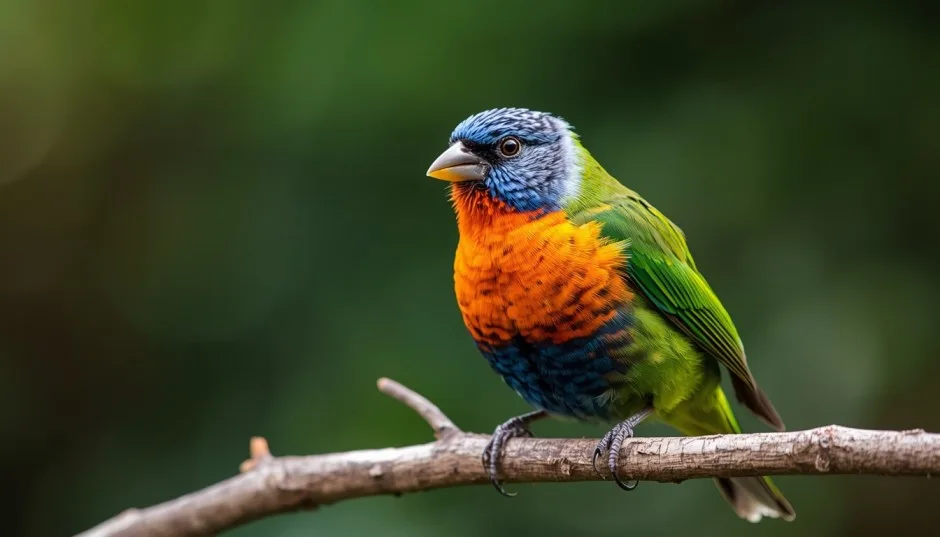
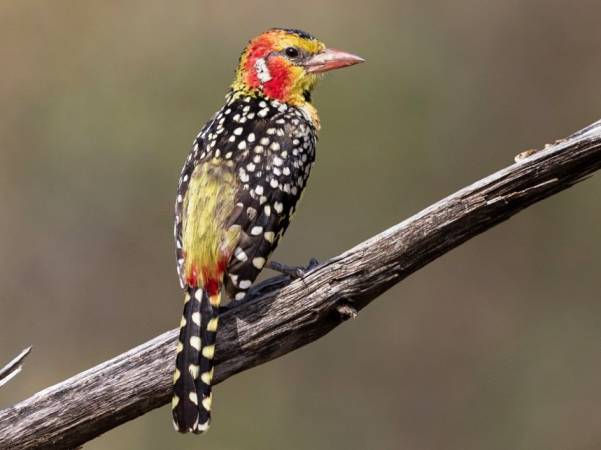
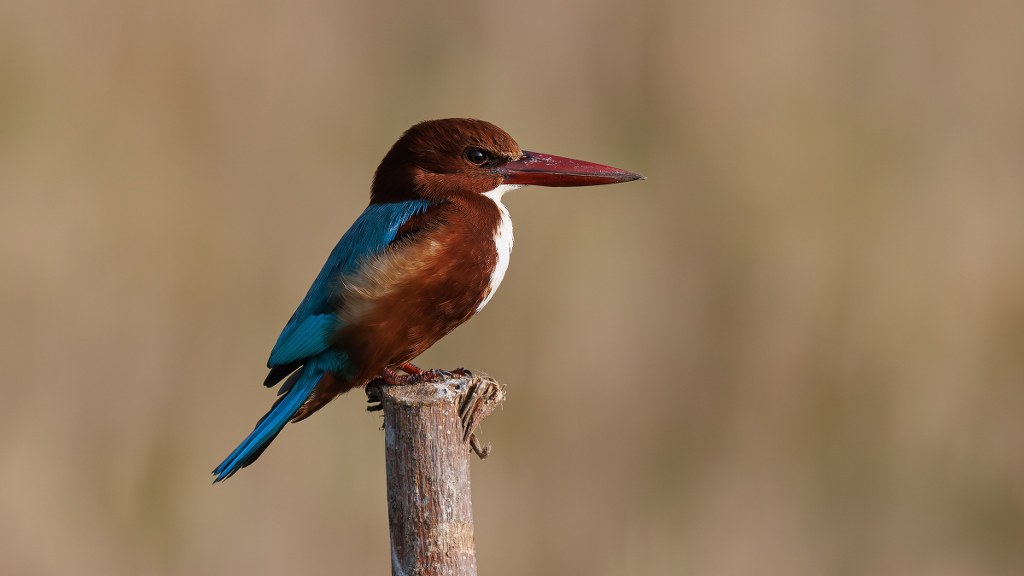
Small birds are the most liked animals among urban residents, more popular than cats, dogs, or butterflies. Songbirds and woodpeckers are considered attractive and bring pleasure. Birds with blue feathers or colorful plumage are generally preferred.
Some birds are actively disliked. Gulls, crows, pigeons, and magpies rank low. Reasons include noise, mess, and nesting on houses. One study found that gulls and pigeons ranked as the third and fourth worst pest species in the UK, after wasps and rats.
The lesson: if you want to maximize your backyard joy, plant for small songbirds. Leave the pigeons alone.
What This Means for Your Setup?
If the research is clear about one thing, it is that focused attention amplifies the benefits. Passive glancing does not produce the same effect as active watching.
That is where binoculars come in. You need glass that helps you see detail without strain. The wrong pair will frustrate you. The right pair will make you want to stay outside longer.
Best Binoculars for Backyard Bird Watching
For backyard watching, you do not need extreme magnification. You need clarity, comfort, and a wide field of view. The 8x42 configuration is the birding gold standard for good reason.
Why 8x42 works best: Eight power magnification keeps the image steady in your hands. A 42mm objective lens gathers enough light for dawn and dusk viewing. The ratio of objective lens to magnification is about 5.25, which falls within the recommended 1:5 ratio for sharpness and clarity.
Why not 10x? Ten power binoculars magnify hand shake too. For backyard distances—usually 20 to 50 feet—you do not need the extra reach. The wider field of view of an 8x makes it easier to find birds in trees.
Why not compacts? Small binoculars with 25mm lenses are lightweight but dim. They struggle in low light. For backyard feeders, brightness matters more than portability.
The Picks That Match the Research
Nikon Monarch M5 8x42 is the most recommended beginner binocular. It has ED glass for sharp, color-accurate images. Close focus is 8 feet, so you can watch birds in the understory. It weighs just over 21 ounces. The lifetime no-fault warranty protects your investment .
Celestron Nature DX ED 8x42 offers the best value at around $150. ED glass eliminates color fringing. It is waterproof and fog-proof. The field of view is wider than the Nikon at 388 feet per 1,000 yards. The tradeoff is slightly softer edges.
Vortex Diamondback HD 8x42 is the most durable option. The rubber armor survives drops. The VIP warranty replaces anything, no questions asked. If you are hard on gear, this is the one.
Athlon Optics Midas UHD 8x42 uses a lightweight magnesium chassis. The UHD glass and phase-corrected prisms deliver bright, sharp images. Argon purging prevents fogging in wet weather.
What to Avoid?
10x magnification for beginners. The shake will frustrate you. Start with 8x.
Compact binoculars under 30mm. They are dim. You will miss plumage details.
Zoom binoculars. The optics are usually poor quality at both ends of the zoom range.
The Final Thoughts
The birds backyard motivation research is clear. Watching birds improves wellbeing, reduces anxiety, and strengthens your connection to nature. The effect is strongest when you engage actively rating your joy, identifying species, paying attention.
A good pair of 8x42 binoculars makes that engagement easier. The Nikon Monarch M5, Celestron Nature DX ED, and Vortex Diamondback HD all deliver the clarity and comfort you need.
Pick one. Set up a feeder. Sit outside for thirty minutes. The science says you will feel better. My experience says the same.