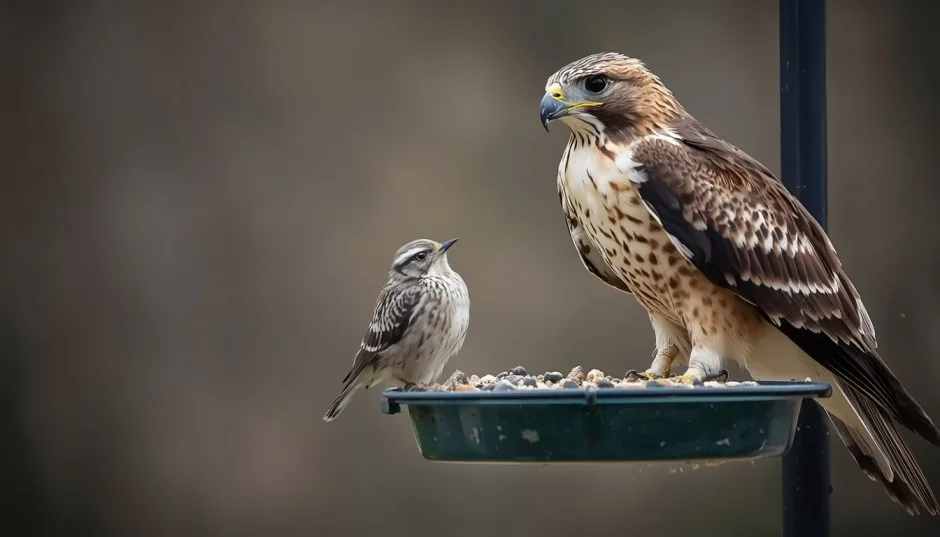
You love watching songbirds visit your yard. The chickadees, cardinals, and finches bring you joy. Then it happens. A hawk swoops down. The birds scatter. Sometimes, they are not fast enough.
It is a shocking sight. One moment there is a peaceful scene. The next, a puff of feathers floats down. You feel helpless. You feel guilty.
You are not alone. Many bird lovers face this problem. The question is simple: how to keep hawks away from bird feeders? The answer is more complex. It involves understanding nature. It requires practical solutions.
A Cooper's hawk is the most common culprit at backyard feeders . These raptors have adapted well to suburban life. They are agile hunters. They can chase prey through dense trees . They are not interested in your seeds. They are interested in the birds eating them.
The good news is you can take steps to protect your songbirds. This guide offers practical advice. It is based on real experience. It uses proven methods.
Why Hawks Visit Bird Feeders?
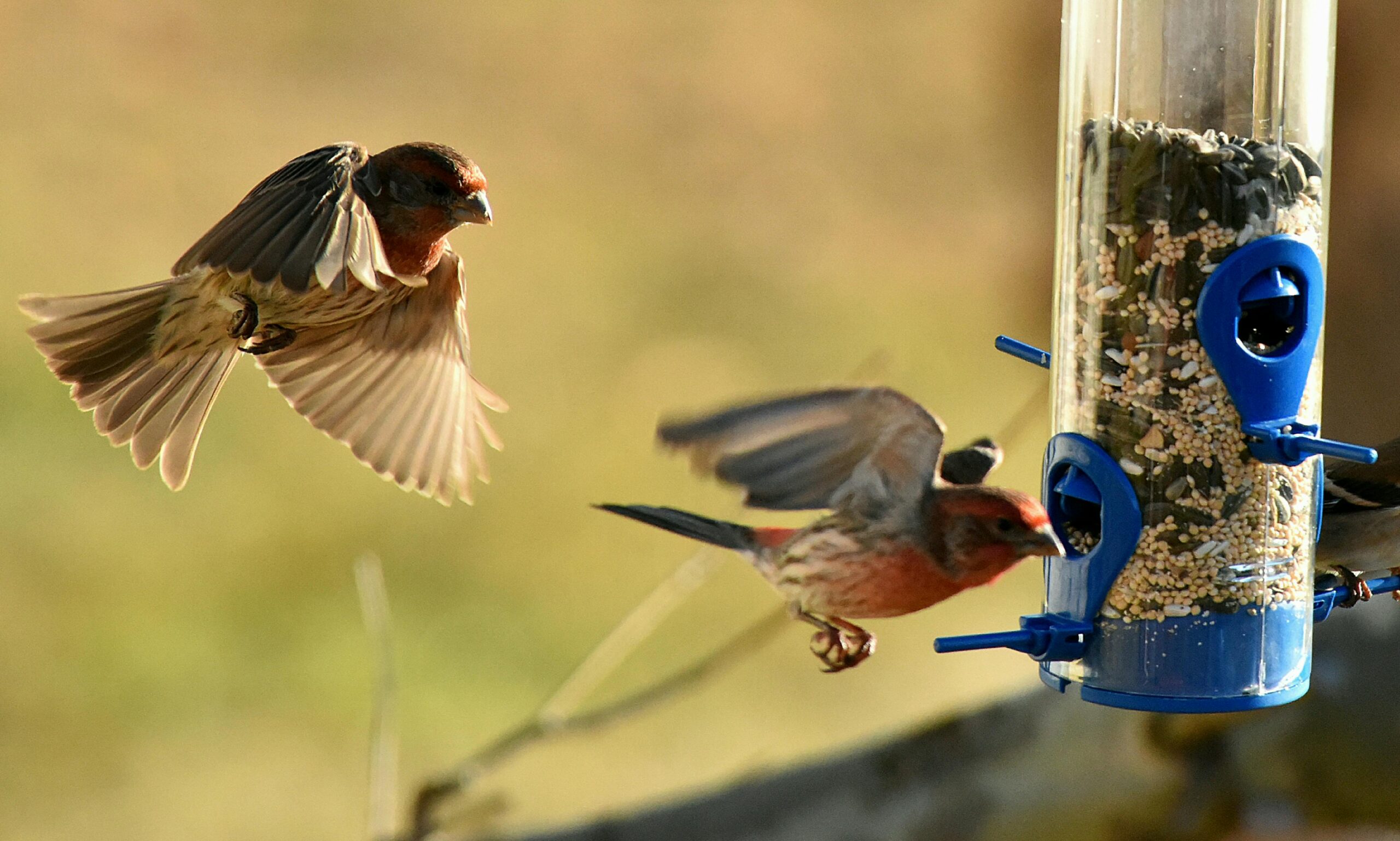
Hawks do not eat birdseed. They eat the birds that eat the seed. A bird feeder creates a concentration of prey. It is like a buffet for a hawk.
Related Article: Are Hawks Protected in Florida? Conservation and Protection Efforts
The number of hawks visiting feeders has increased. In 1989, Cooper's hawks were reported at only 6.4% of feeders. By 2014, that number jumped to 21.9% . More people are feeding birds. More hawks are taking advantage of this.
It is a natural interaction. Hawks are part of the ecosystem. They are protected by law. You cannot harm them . Your goal is to make your yard less appealing to them.
Provide Shelter for Songbirds
This is the most effective strategy. Songbirds need safe places to hide. They need cover to escape a hawk attack.
Plant Dense Shrubs and Trees
Evergreens are excellent choices. They provide cover year-round. Native trees and shrubs are even better. They also provide natural food sources .
Place your feeders near this cover. The optimal distance is about 10 to 15 feet . This is close enough for birds to escape. It is far enough to prevent ambush by cats.
Build Brush Piles
A brush pile is a simple solution. Gather branches and twigs. Make a pile that is about 8 feet wide and 4 feet high. Place it within 20 feet of your feeder . It creates a quick hiding spot for birds.
Strategic Feeder Placement
Where you put your feeder matters. An exposed feeder is a danger zone. A sheltered feeder offers protection.
Hang Feeders Near Cover
Do not place feeders in the middle of an open lawn. It makes birds easy targets. Hang them under tree branches. Place them under an awning or eave . This gives birds a route to safety.
Avoid Ground Feeding
Ground feeding is risky. Birds on the ground cannot react as quickly. They have fewer escape routes. They are easy prey for hawks .
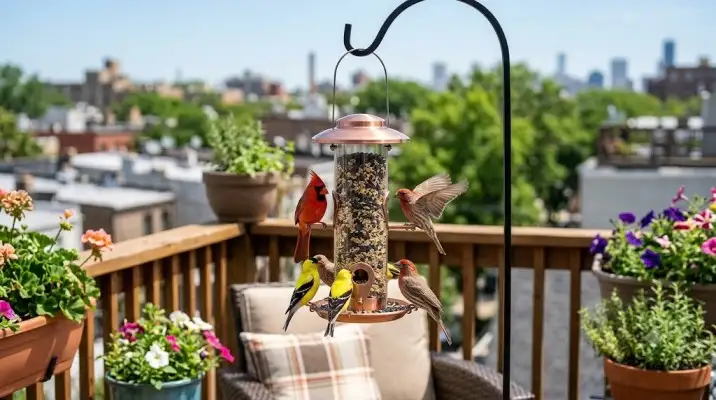
Consider switching to a hanging platform feeder. This elevates the birds. It gives them a better view. It makes it harder for a hawk to ambush them . You can also use a tray below your feeder. It catches spilled seed. This prevents seed from attracting ground-feeding birds .
Use Physical Barriers and Cages
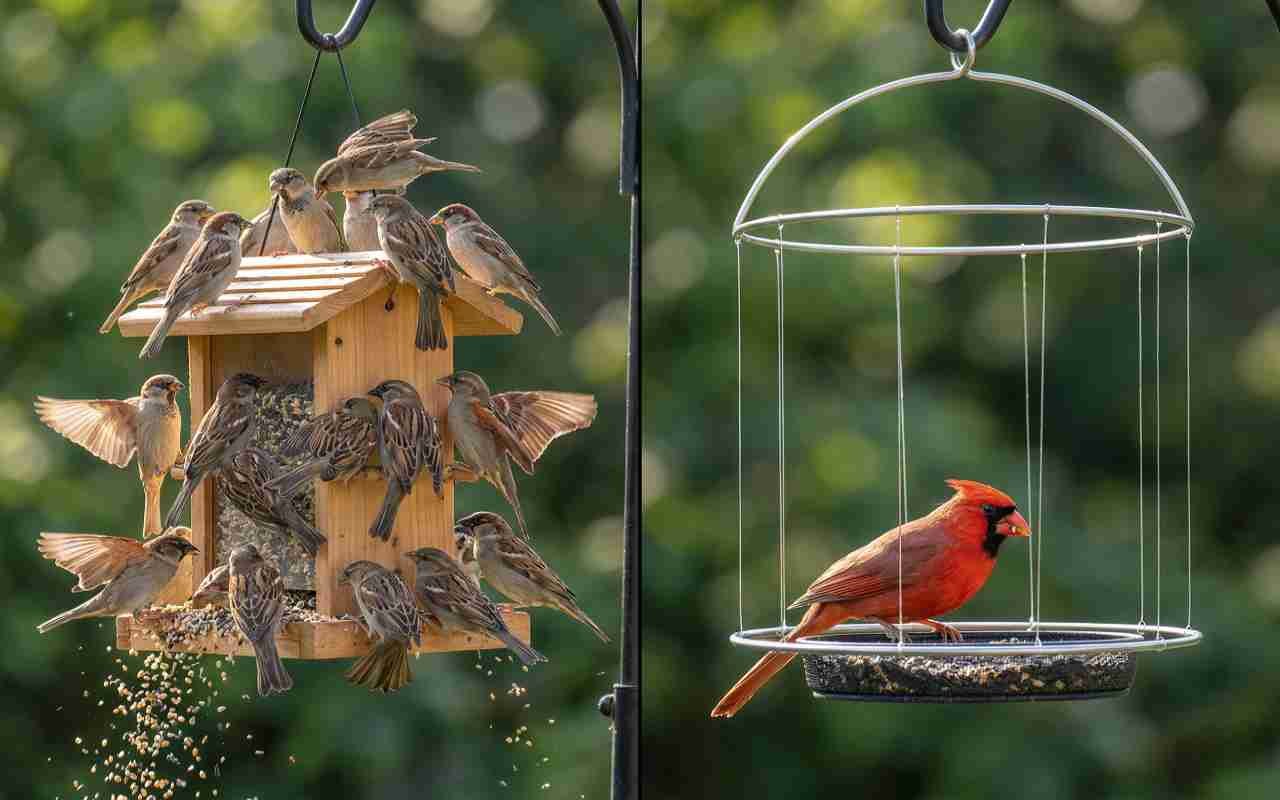
You can buy feeders that offer physical protection. They are designed to keep larger birds out. They also help small birds escape.
Caged Feeders
These feeders have a wire cage around them. The holes are small enough for songbirds to enter. They are too small for hawks to get through. This gives the birds a safe space to eat.
Hanging Feeders
Hanging feeders are more difficult for hawks to reach. They cannot easily swoop down. They cannot perch on them. This provides some protection. They are a good alternative to ground feeding .
Visual Deterrents That Work
Visual deterrents can be effective. They are easy to implement. They are inexpensive.
Shiny Objects
Hawks are wary of unfamiliar sights. Shiny objects can spook them. They create flashes of light. They suggest movement and danger.
Read Also: How to Identify Common Birds in San Antonio?
You can hang old CDs or DVDs. Strips of aluminum foil work well. Reflective tape is another option. Hang them near your feeders . The reflections will disrupt a hawk's hunting pattern.
Decoys
Plastic owls and fake hawks can work temporarily. Squirrels are naturally wary of them . The same may apply to real hawks.
The key is to move them regularly. A stationary decoy becomes part of the scenery. Hawks (and squirrels) get used to it . Move it every few days. This maintains the illusion of a real predator.
Take a Temporary Break
Sometimes, the best solution is a temporary shutdown. If a hawk is persistent, close the buffet.
Remove Feeders for a Week
Take down all your feeders for about a week . The songbirds will still find food. Studies show that only about 25% of their food comes from feeders . They will be fine.
The hawk will eventually leave. It will look for prey elsewhere. After a week, you can put the feeders back up . This is a simple and effective method. It often works when other tactics fail.
Addressing the Squirrel Problem
Squirrels also attract hawks. A hawk may be looking for a squirrel meal. A squirrel's fear of hawks is quite real . If you want to keep hawks away from squirrels, you need to address the squirrel presence.
Use Squirrel-Proof Feeders
These feeders are designed to keep squirrels out. They have weight-activated mechanisms. They close when a squirrel gets on them. This limits the food source for squirrels. It makes your yard less attractive to them.
Remove Squirrel Attractants
Clean up any fallen nuts or fruits. Secure your garbage cans. This reduces the squirrel population in your yard. It removes a potential hawk target.
Important Legal and Ethical Considerations
This is very important. Hawks are protected by state and federal laws. You cannot harm, harass, or kill them . It is illegal. It is also unethical.
Observe and Appreciate
Try to see this from a different angle. You are witnessing nature in action. Predators are a sign of a healthy ecosystem . They often prey on sick or weak birds. This can actually strengthen the bird population.
Trending Article: Does Taiga Have Mainly Migratory Birds and Small Mammals?
Many birders are thrilled to see a hawk. It is an exciting drama. It is a rare opportunity to see predator-prey interactions up close .
Frequently Asked Questions - Hawk Attacking Birds at Feeder
Q1: How do I keep hawks away from my bird feeder?
The most effective method is to provide cover for songbirds. Place feeders near dense shrubs or trees. Use visual deterrents like shiny objects. If the problem persists, take down your feeders for a week or two.
Q2: Does a fake hawk keep squirrels away?
A fake hawk can deter squirrels, but only temporarily. Squirrels are naturally wary of hawks . However, they will quickly get used to a stationary decoy. You must move the decoy regularly for it to remain effective .
Q3: What kind of hawk attacks birds at feeders?
The Cooper's hawk is the most common culprit. They are agile hunters. They are well-suited to hunting in backyards . The sharp-shinned hawk is another frequent visitor .
Q4: What should I do if a hawk is attacking birds at my feeder?
First, provide cover for the songbirds. Place your feeders near shrubs or trees. Use visual deterrents. You can also take down your feeders for a short period. This encourages the hawk to move on . Remember that hawks are protected by law. You cannot harm them.
Q5: Do hawks eat birdseed?
No, hawks are carnivorous. They eat other birds, small mammals, and reptiles. They are attracted to bird feeders because of the birds, not the seed.