If you just bought a peach faced lovebird, you are in for a loud, feathery, and wonderful ride. But here is the first real question every owner faces: how much out of cage time do lovebirds need daily? The honest answer is not two hours.
It is closer to four. And that is the minimum. I learned this the hard way when my first lovebird, Mango, started plucking her chest feathers. The vet asked one question: “How long is she locked inside?” I said eight hours.
He just shook his head. That day changed everything. Getting the lovebird daily care requirements right starts with freedom, not just food. Below is real talk on time, trust, safety, and what actually works for a tame lovebird out of cage. No fluff. No marketing.
Why Out of Cage Time Matters More Than a Big Cage?
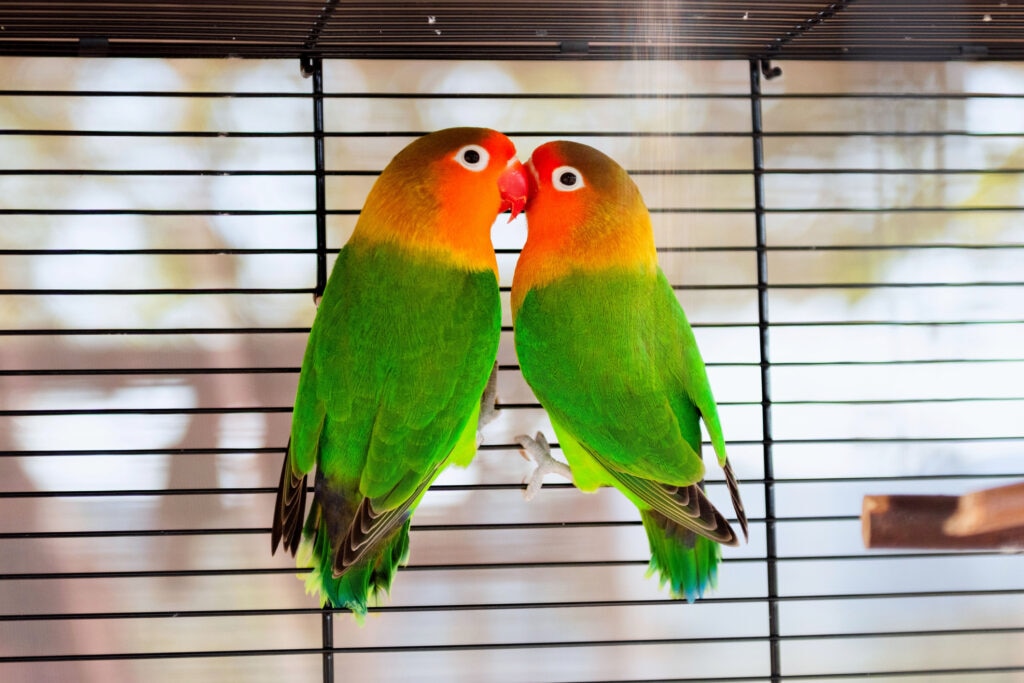
A large cage is great. But a cage is still a cage.
Lovebirds are not like budgies that sit still for hours. A lovebird parrot in the wild flies miles each day. They explore. They chew bark. They chase each other. Inside a cage, even a big one, they cannot do any of that properly.
Read Also: Best Bird Feeder for Indigo Bunting: Complete Guide
I once kept my peach faced lovebird in a flight cage for a whole week. No outside time. By day five, she was screaming non-stop. Not happy sounds. Angry sounds. The moment I opened the door, she flew straight to the curtain rod and bit my ear. That was her way of saying “never again.”
Time outside prevents:
-
Feather plucking
-
Screaming fits
-
Aggressive biting
-
Obesity
-
Claw problems
Skipping out of cage time is like making a child sit in a bathroom all day. They will survive. But they will not be okay.
Exactly How Many Hours Do Lovebirds Need Daily?
Here is the number most pet stores won't tell you.
Minimum: 3 to 4 hours every single day.
Ideal: 5 to 6 hours.
Yes, that is a lot. No, you cannot skip weekends. Lovebirds do not understand Monday vs Saturday. If you let them out for six hours on Sunday and zero hours on Monday, they will get confused and frustrated.
A friend of mine works from home. She lets her two lovebirds out from 9 AM to 3 PM daily. Those birds are calm. They play on their own. They rarely bite. Another owner I know works 10-hour shifts. His lovebird gets only one hour outside. That bird bites hard and screams every evening.
The difference is clear. More time = calmer bird.
Can a Tame Lovebird Stay Out All Day?
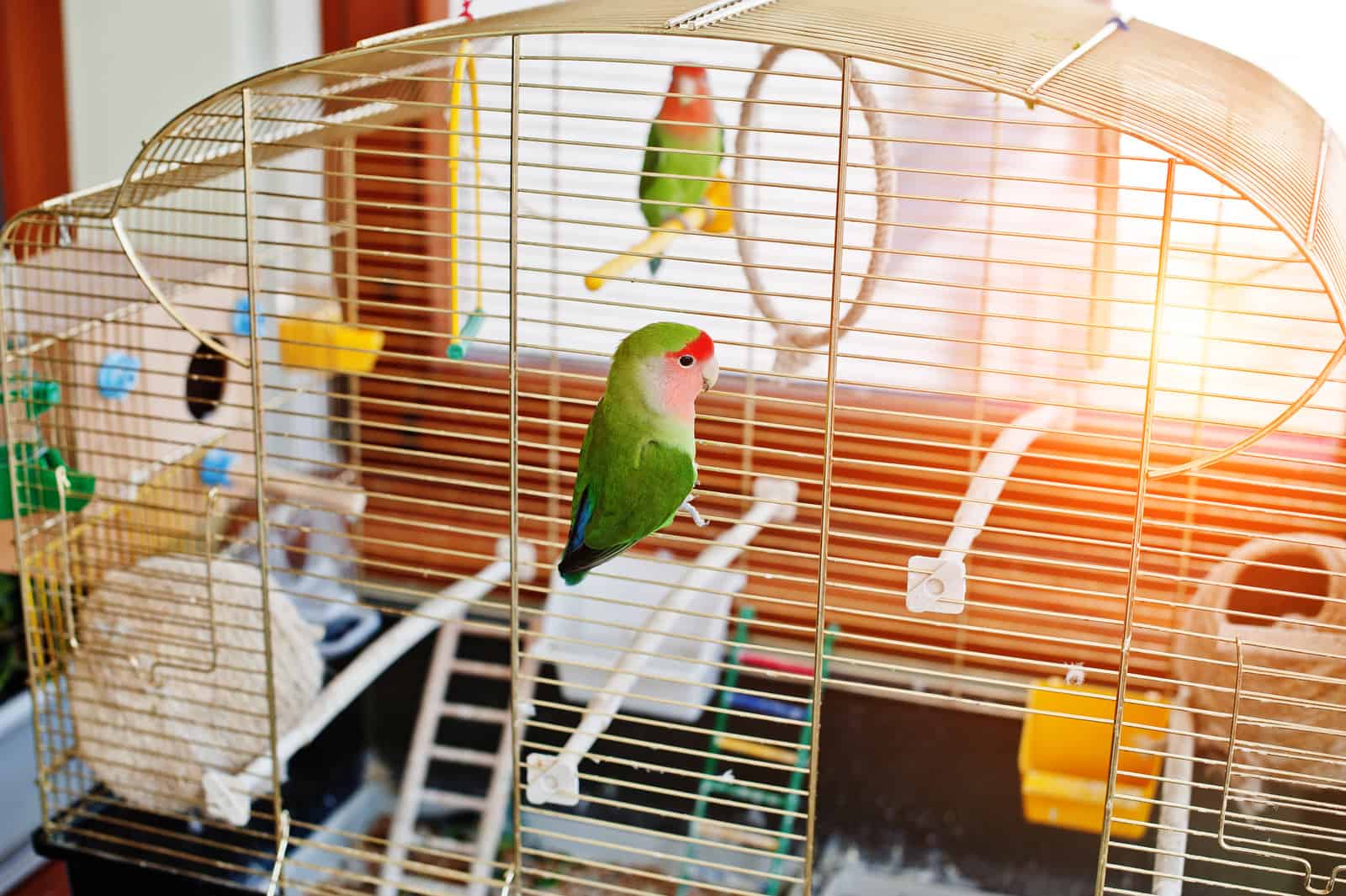
Some owners ask: “Can I just leave the cage open forever?”
Yes and no.
A tame lovebird out of cage all day is fine if the room is 100% safe. But most homes are not safe for a full day. Kitchens have hot stoves. Ceiling fans kill birds every year. Open windows are an escape risk. Other pets like cats or dogs are a real danger.
You Must Also Like: How to Adjust Rain Bird 1800 Pop-up Sprinkler Heads?
I tried leaving my lovebird out while I went to the grocery store. Twenty minutes. Came back to find her chewing a phone charging cable. She was fine. The cable was not. And I got lucky. Next time could be a live wire.
So here is the rule:
-
Supervised time: As long as you want.
-
Unsupervised time: Max 30 minutes, and only in a bird-proofed room.
Morning vs Evening: When Is the Best Time?
Lovebirds are most active at sunrise and sunset.
In the wild, they eat, fly, and play in the early morning. Then they rest mid-day. Then they get active again late afternoon.
I have tested both schedules.
Morning freedom (7 AM to 10 AM): My lovebird is calmer the rest of the day. She eats better. She naps happily in her cage after lunch.
Evening freedom (5 PM to 8 PM): She plays hard but gets over-tired. Sometimes she refuses to go back in and I have to chase her with a perch.
Morning works better. Try to give the first 2 to 3 hours of daylight as out of cage time. Your bird will thank you.
How to Safely Increase Out of Cage Time (Without Destroying Your Home)
You want to give more freedom. But you also like your furniture. I get it.
Here is what actually works.
Step 1: Bird-Proof One Room Completely
Pick one room. Close windows. Remove toxic plants (lilies, poinsettias, philodendrons). Cover mirrors if your bird attacks its reflection. Hide all wires behind cord protectors. Close toilet lids. Remove scented candles and air fresheners.
My bird room is my home office. No exposed wires. No open drinks. No other pets. That room is 100% hers.
Step 2: Add Playstands and Foraging Toys
A bored lovebird will chew your baseboards. A busy lovebird will chew its toys.
Put at least two playstands in different spots. Rotate toys every three days. Hide sunflower seeds inside paper rolls or cardboard pieces. Make her work for treats.
Step 3: Train the “Step Up” and “Go Home” Commands
A tame lovebird out of cage should know two things: stepping onto your finger, and going back to the cage on command.
Teach “go home” with a high-value treat like a small bit of millet. Say the phrase. Point to the cage door. When she goes inside, give the treat immediately. Repeat 10 times a day for two weeks.
My bird now flies to her cage when I say “bedtime.” No chasing. No stress.
Lovebird Daily Care Requirements Beyond Out of Cage Time
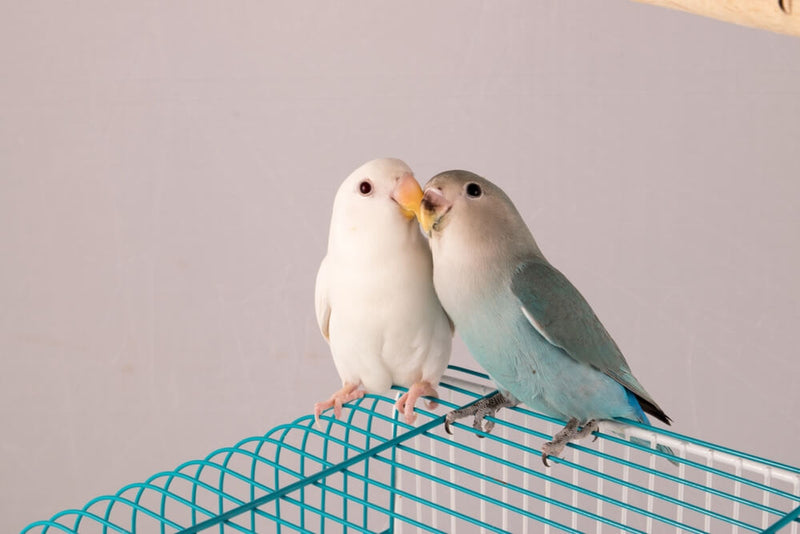
Time outside is just one part. Here is the full lovebird daily care requirements checklist.
Fresh food and water: Change water twice a day. Remove wet or spoiled food after two hours.
Pellets + veggies: Seeds are like junk food. Pellets should be 60-70% of diet. Offer dark leafy greens (kale, bok choy, spinach) daily.
Bathing: Spray with a water bottle or offer a shallow bowl three times a week.
Sleep: 10 to 12 hours of quiet, dark sleep. Cover the cage or use a blackout cover.
Social interaction: At least 30 minutes of direct one-on-one time each day. Talking, singing, or just sitting near the cage counts.
If you skip any of these, no amount of out of cage time will fix the problem.
How Long Can a Lovebird Live With Proper Daily Care?
A common Google search is how long can a lovebird live.
Bad care: 5 to 7 years.
Average care: 10 to 12 years.
Excellent care: 15 to 20 years.
The oldest lovebird I personally know is 22 years old. Her owner is retired. That bird is out of the cage for eight hours daily. She eats organic pellets and fresh chop. She sees an avian vet once a year. She has never plucked a feather.
Your lovebird daily care requirements directly decide the lifespan. Out of cage time is not a bonus. It is a necessity. Skip it, and you cut years off their life.
Peach Faced Lovebird Specific Needs (Different From Other Lovebirds)
All lovebirds are similar. But the peach faced lovebird has a few quirks.
They are louder. Peach faced lovebirds have a sharper, more persistent call. If noise is a problem for you, consider a Fischer’s lovebird instead.
They chew more. Something about the peach face mutation makes them obsessed with shredding paper, cardboard, and soft wood. Give them plenty of safe shredding toys or they will destroy your books.
They bond harder to one person. A single peach faced lovebird will often pick one human as its mate. That human gets all the love. Everyone else gets bitten. Socialize early with multiple people to prevent jealousy.
I learned this the hard way. My peach faced lovebird adores me. She attacks my wife. We are working on it. But it is slow progress.
Signs You Are Not Giving Enough Out of Cage Time
Your bird will tell you. You just have to listen.
Feather destruction: Chewed feathers on the chest or wings. This is stress. This is the biggest red flag.
Screaming at the cage door: Not normal chirping. Loud, repetitive, angry screaming.
Biting hard when you open the cage: That is frustration, not aggression.
Pacing back and forth on a perch: Like a tiger in a zoo. It means boredom and distress.
Refusing to eat normal food: Stress affects appetite.
If you see any of these, double the out of cage time immediately. Then see a vet if no improvement in two weeks.
Common Excuses Owners Make (And Why They Are Wrong)
“My cage is big enough.” No cage replaces flight. Even an aviary is still confinement.
“I am too busy.” Then do not get a lovebird. Get a snake or a fish. Lovebirds need time.
“My bird is happy in the cage.” Birds hide illness and depression well. A “quiet” bird is not always a happy bird. Often it is a depressed bird.
“I let her out on weekends only.” That is like feeding your child only on Saturdays. Weekday freedom matters just as much.
Be honest with yourself. If you cannot give 3 to 4 hours daily, a lovebird is not for you.
Real Sample Daily Schedule (What Works for Me)
Here is my actual daily routine with my peach faced lovebird.
-
7:00 AM – Open cage door. She flies to her playstand.
-
7:00 AM to 10:00 AM – Out of cage. I work nearby. She plays, eats breakfast, bathes.
-
10:00 AM – She goes back to cage on her own for a nap. I close the door.
-
10:00 AM to 2:00 PM – Cage time. She sleeps and eats pellets.
-
2:00 PM to 5:00 PM – Second out of cage session. More play, training, and social time.
-
5:00 PM – Back in cage. I cover her at 7:00 PM for 12 hours of sleep.
Total daily out of cage time: 6 hours.
Is this exhausting? Sometimes yes. But she is healthy, quiet, and has not plucked a single feather in three years. That is the trade-off.
Final Takeaway from Years of Lovebird Ownership
Do not search for shortcuts. How much out of cage time do lovebirds need daily is not a debate. The answer is 3 to 4 hours minimum, 5 to 6 hours ideal. Your lovebird daily care requirements start with freedom.
A peach faced lovebird inside a cage all day will scream, bite, pluck, and die young. A lovebird with daily out of cage time will be your loud, loving, feathery shadow for 15 to 20 years.
Give the time. Bird-proof the room. Train the recall. And enjoy the chaos. It is worth it.