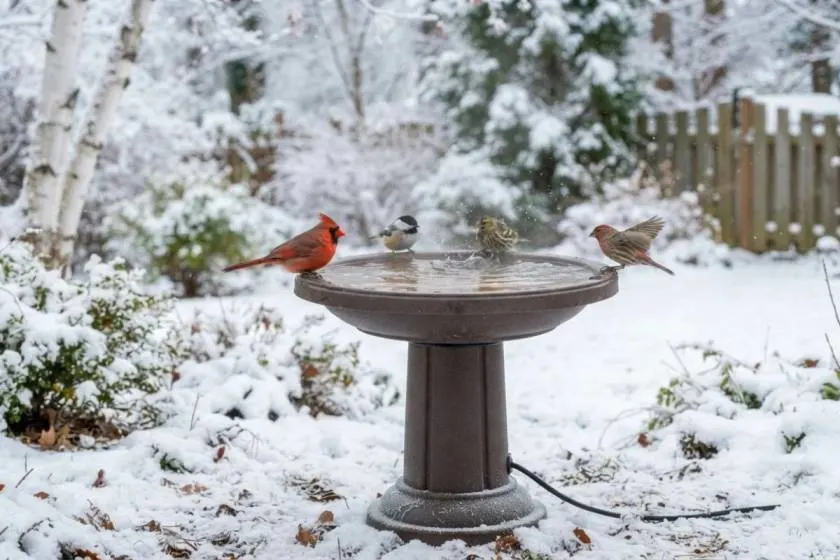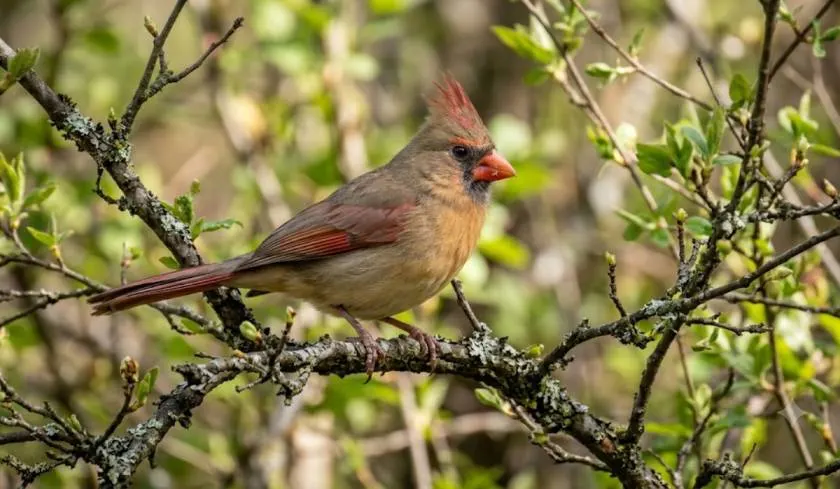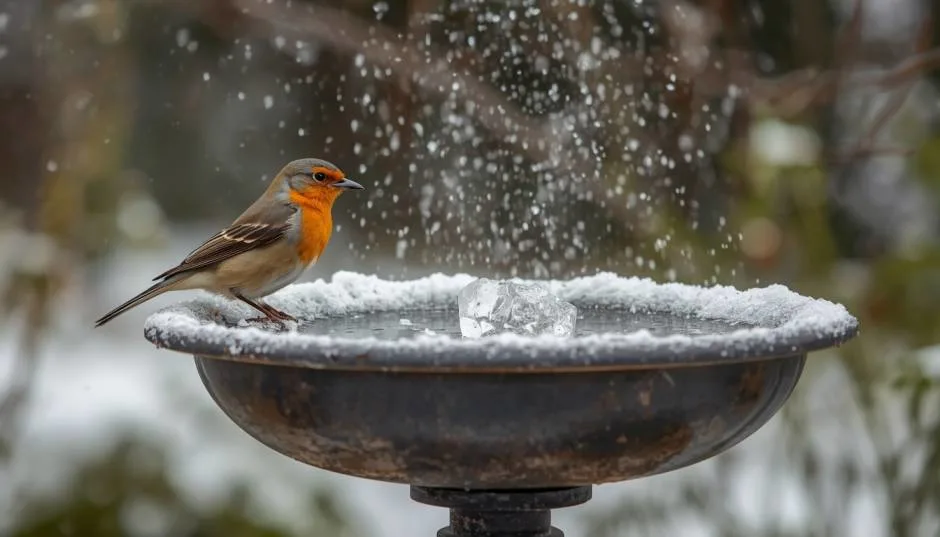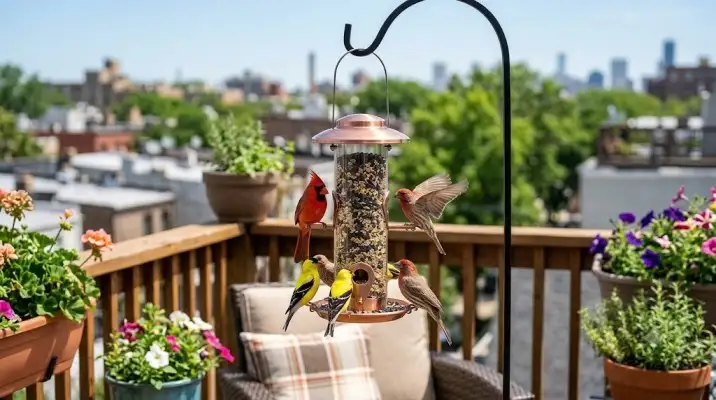
A heated bird bath for winter solves a problem most backyard birders overlook until the first hard freeze. Birds need liquid water year-round, but snow and ice lock up every natural source.
I learned this the hard way three winters ago when a cold snap hit and my pedestal bath turned into a solid block of ice for eleven days. The chickadees and cardinals kept visiting, hopping around the frozen rim, clearly thirsty.
That guilt pushed me to buy my first heated bath for my deck. Since then, I have tested four models, burned through two cheap de-icers, and made enough wiring mistakes to fill a small notebook.
This guide shares what actually works, what wastes money, and how to pick a heated bird bath for deck use without repeating my errors.
Why Winter Water Matters More Than You Think?
Birds can technically eat snow. But melting that snow costs body heat they cannot spare. A chickadee burns most of its fat reserves just surviving a cold night . Spending the next day converting ice into water is a terrible trade.
Read Also: Does Taiga Have Mainly Migratory Birds and Small Mammals?
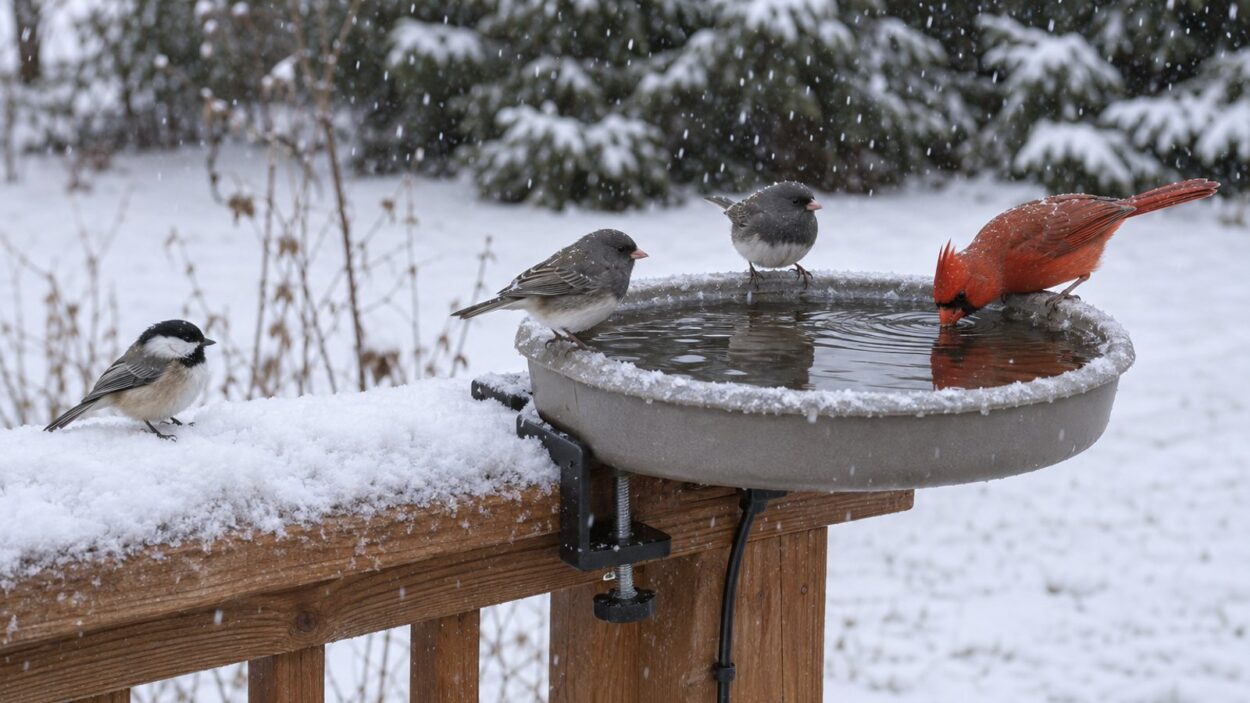
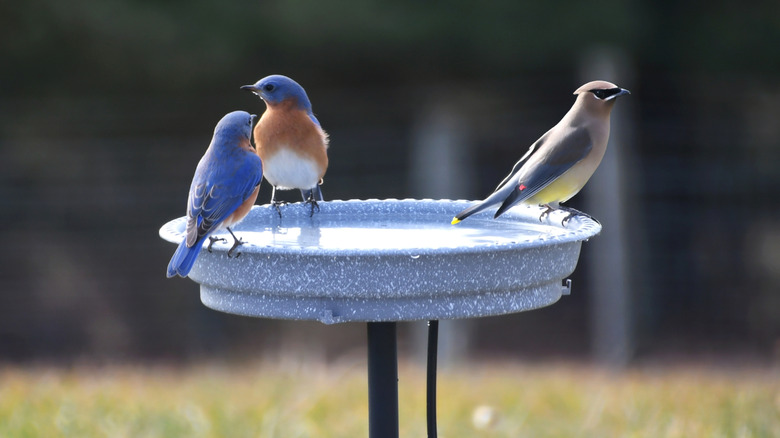
Open water also draws species that ignore feeders entirely. Robins, bluebirds, and waxwings do not eat seed, but they all drink. A heated bath for winter pulls in birds your feeders never see.
Cornell Lab’s Project FeederWatch notes that unfrozen water in winter attracts more birds than food alone . That matches what I see on my deck. On the coldest mornings, my bath gets more traffic than the suet feeder three feet away.
Heated Bath vs. De-Icer: Know the Difference Before You Buy
A heated bird bath for winter has the heating element sealed into the basin. One cord, one unit, nothing to knock loose. You buy it, plug it in, and forget it.
A de-icer is a separate heater that sits in a bath you already own. It costs less. But it floats around, the cord dangles in the water, and cheap ones lack thermostats.
Here is my honest take. If you already own a plastic or metal bath you love, buy a thermostatically controlled de-icer. I used a 50-watt K&H de-icer in my old pedestal bath for two seasons. It kept a hole open through -10°F nights. The cord was annoying, but it worked.
If you are starting fresh, or your current bath is ceramic or concrete, buy a complete heated unit. Ceramic and stone crack when water freezes inside them . I watched a neighbor’s stone bath split down the middle after one January freeze. He was not happy.
What Actually Matters When Choosing a Heated Bird Bath for Deck Use?
Wattage: Match It to Your Winter, Not Your Worry
Most heated baths run 50 to 150 watts. A 75-watt unit handles typical winters down to about 0°F . A 150-watt model gives you headroom for prolonged subzero spells.
You Must Also Like: Do Black Capped Chickadees Migrate?
I live in a zone where single-digit nights happen but do not linger. My 100-watt deck-mounted bath has never failed. A friend in northern Minnesota runs a 150-watt API model and swears by it. If your winters routinely drop below -10°F, spend the extra money on wattage.
Higher wattage does not mean higher bills. Thermostats cycle the heater on and off. My 100-watt unit adds roughly $6 to $8 per month during the coldest stretch. That is less than a bag of premium seed.
The Thermostat Is Non-Negotiable
Skip any heated bath without a thermostat. A constant-on heater wastes electricity and can overheat the water in mild spells.
Here is the uncomfortable truth I discovered in reviews and my own testing: some budget models cycle water up to 86°F or even higher . That is not a bird bath. That is a hot tub.
Birds need water just above freezing, not warm water. One reviewer who measured their unit’s performance noted that birds rarely bathe above 15°C (59°F) in winter, and water at 30°C (86°F) is biologically wrong for them .
Look for a thermostat that kicks on around 35–40°F and shuts off once the water is safely liquid. If the listing does not say “thermostatically controlled,” assume it is not.
Mounting: Deck Rails Are Not All the Same
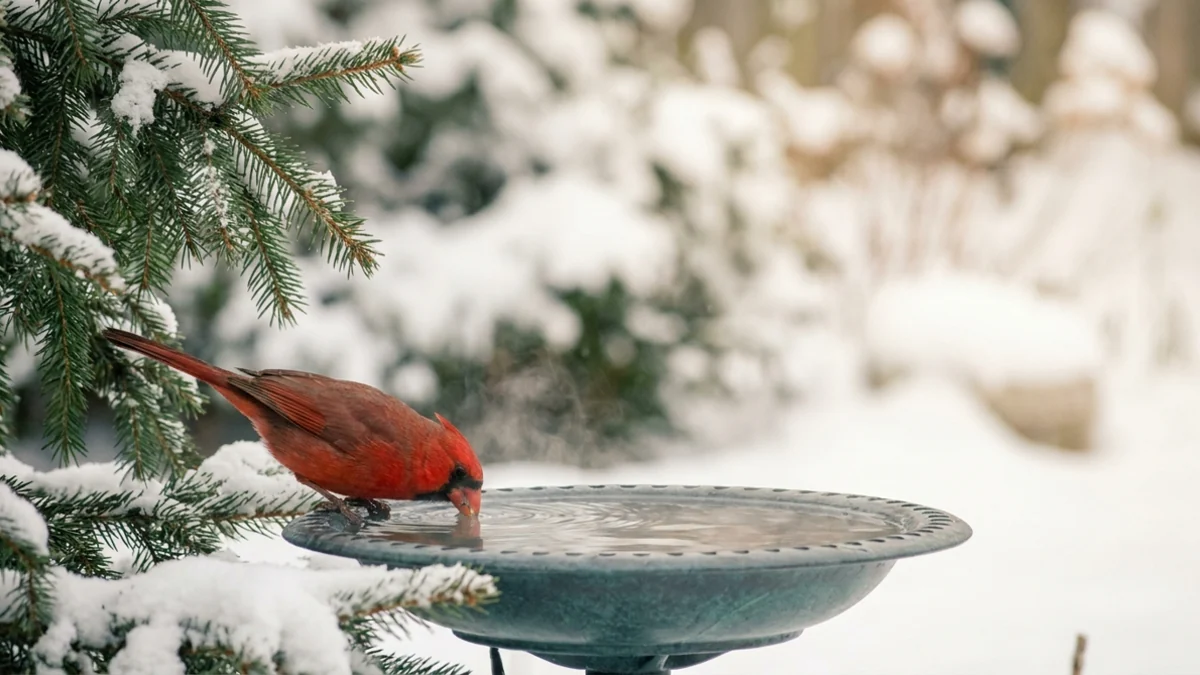
A heated bird bath for deck use needs a secure clamp. My first deck bath wobbled in wind because the bracket only fit a 2x4 rail. My current rail is a 2x6 composite, and the clamp barely opened wide enough.
Measure your rail before you buy. API’s deck mount fits standard 2x4 and 2x6 rails and tilts for easy emptying . That tilt feature sounds minor until you are scrubbing algae off a frozen bowl in February. Trust me, you want the tilt.
Ground stakes and pedestals work too. But for deck viewing, a rail mount keeps the bath at eye level. You will actually notice when the water runs low, which happens more often than you expect.
Cord Length and Safety: The Part Everyone Underestimates
Most heated baths ship with cords between 5 and 12 feet. My deck outlet sits six feet from where I wanted the bath. The included 5.6-foot cord barely reached.
You will likely need an outdoor-rated extension cord. Not an indoor one. Not a cheap lamp cord. An outdoor-rated cord with a GFCI-protected outlet. Moisture plus electricity plus winter is a combination that trips breakers and, worse, starts fires.
Route the cord so it does not sit in standing water or snowmelt. I loop mine under the deck rail and zip-tie it out of the way. Squirrels chew cords. One reviewer mentioned a hidden, chew-resistant cord as a key feature, and they are right.
3 Real-World Setups That Work
The Deck Rail Setup (Best for Close Viewing)
A deck-mounted heated bath with a 100-watt element and a wide clamp. Fill it every other day. Expect cardinals, chickadees, titmice, and nuthatches. Keep it within three feet of a window if you want photos.
Add window decals if the bath sits close to glass. Birds fly toward water and do not see glass.
The Ground-Level Setup (Best for Variety)
A ground stake bath or a low pedestal with a 150-watt unit. Juncos, sparrows, doves, and towhees prefer drinking low. My ground bath gets species my deck bath never sees.
The trade-off is cats. Keep it at least 10 to 15 feet from shrub cover so birds have warning time.
The Existing Bath Upgrade (Best for Budget)
A drop-in de-icer with a thermostat, 50 to 75 watts, placed in a plastic or metal bath you already own. This is the cheapest path. It works. Just secure the cord so it does not pull the unit out of the water.
The Mistakes I Made So You Do Not Have To
I let my first heated bath run dry for two days during a busy week. The unit survived, but the plastic warped slightly. Most modern units handle dry running better than older models.
Still, check the water level daily. Evaporation plus drinking birds empties a shallow basin fast.
I bought a cheap ceramic “frost-proof” bath before I knew better. It cracked in its first freeze. Ceramic, stone, concrete, and glass are all wrong for heated winter baths . Stick with plastic or metal.
I placed my bath right next to my feeders. Bad idea. Droppings and seed hulls ended up in the water within days. Keep water and food separated by 10 to 15 feet . The birds will find both.
A Quick Word on Solar Bird Bath Fountains
Solar bird bath fountains are lovely in summer. In winter, they are nearly useless in most climates. Cloud cover and short days mean the pump barely runs. The moving water might delay freezing for an hour or two, but it will not keep a bath open overnight.
If you already own a solar fountain, bring it inside for winter. Run a heated bath instead. Do not try to combine the two unless you live somewhere with brutal sun year-round.
The Final Thoughts
A heated bird bath for winter is not a luxury. It is the single highest-impact thing you can add to a winter bird habitat. Food supplements what birds already find. Water replaces what they cannot.
Buy a thermostatically controlled unit. Match wattage to your climate. Mount it securely. Use an outdoor cord. Clean it regularly. Skip ceramic and solar. Keep it away from feeders and close to cover.
Do those things and you will watch birds drink through the coldest mornings of the year. That is worth the cost of a decent unit and a little wiring common sense.
FAQ's About Solar Bird Bath Fountain
Will a heated bird bath attract birds immediately?
Not always. It can take a week or two for birds to find a new water source. Once they do, they remember it. My current bath took nine days to get its first visitor. Now it gets a queue on cold mornings.
Is it safe to leave a heated bird bath plugged in all winter?
Yes, if you use a GFCI outlet and an outdoor-rated cord. Check the cord monthly for chew marks or wear. Unplug it during ice storms if the power flickers.
Do I need to clean a heated bird bath in winter?
Yes. Birds still poop in it. Algae grows slower in cold water, but it grows. Scrub the basin every two weeks with a stiff brush and fresh water. No soap. No bleach.
What temperature should the water be?
Just above freezing. If the water feels warm to your touch, the thermostat is running too hot. Ideal winter water is cold enough that you would not want to bathe in it.