The female northern cardinal is not the flashy red bird most people picture. She is subtler, warmer, and arguably more interesting once you know what to look for.
Here is the honest identification breakdown, plus the nesting habits and food preferences that keep these birds coming back to the same yard year after year.
The Female Northern Cardinal: What She Actually Looks Like?
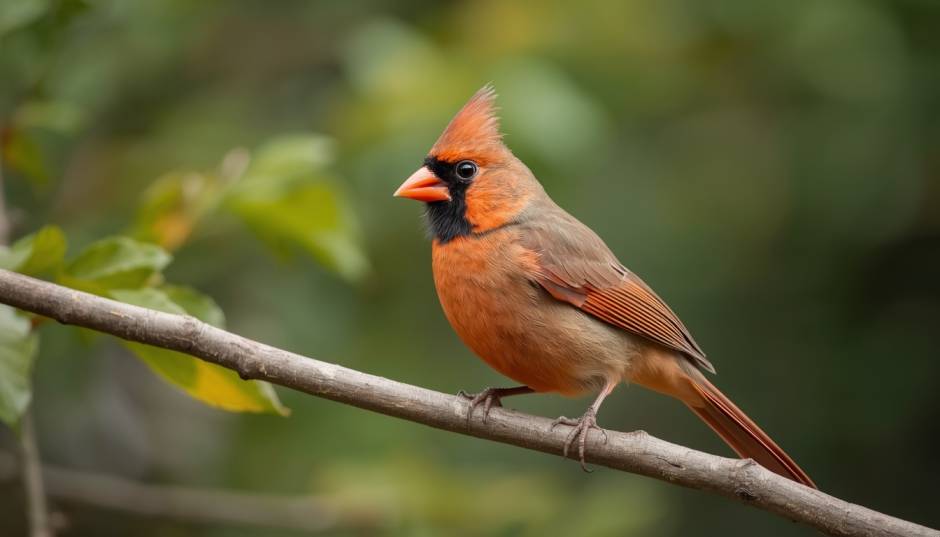
The female cardinal is a medium-sized songbird, slightly smaller than the male. She measures about 21 centimeters in length, compared to his 22 to 23 centimeters.
Read Also: How Do Birds “Fall in Love”? A Look at the Appointments
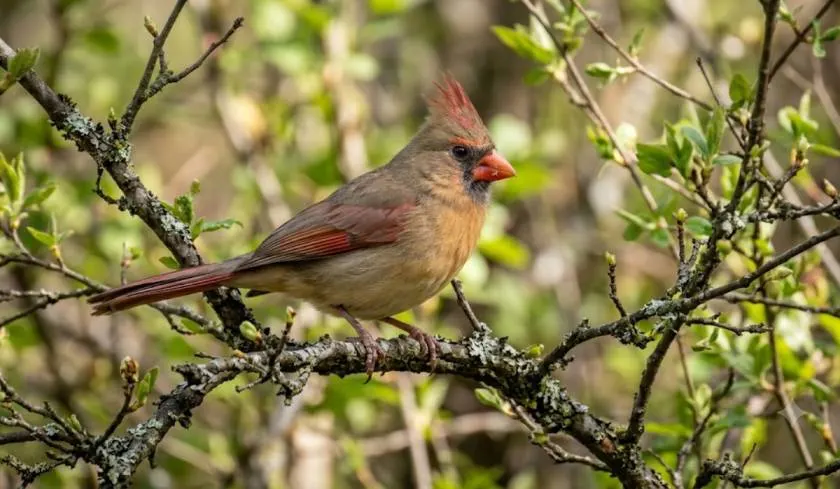
Her plumage is the key difference. Where the male is bright red with a black face mask, the female is grayish-tan or pale brown overall. But she is not dull. Look closely and you will see warm reddish tinges on her wings, tail, crest, and breast.
The red is muted, not absent. It looks like someone took the male's color and diluted it with earth tones. Both sexes share the same prominent crest and the same heavy, conical orange-red bill.
That bill is the fastest way to confirm you are looking at a cardinal and not something else. Juveniles look like females but have gray or black bills instead of orange-red, and their crests are shorter. First-year females can be tricky, but the bill color usually gives them away.
How to Tell Her Apart From Other Birds?
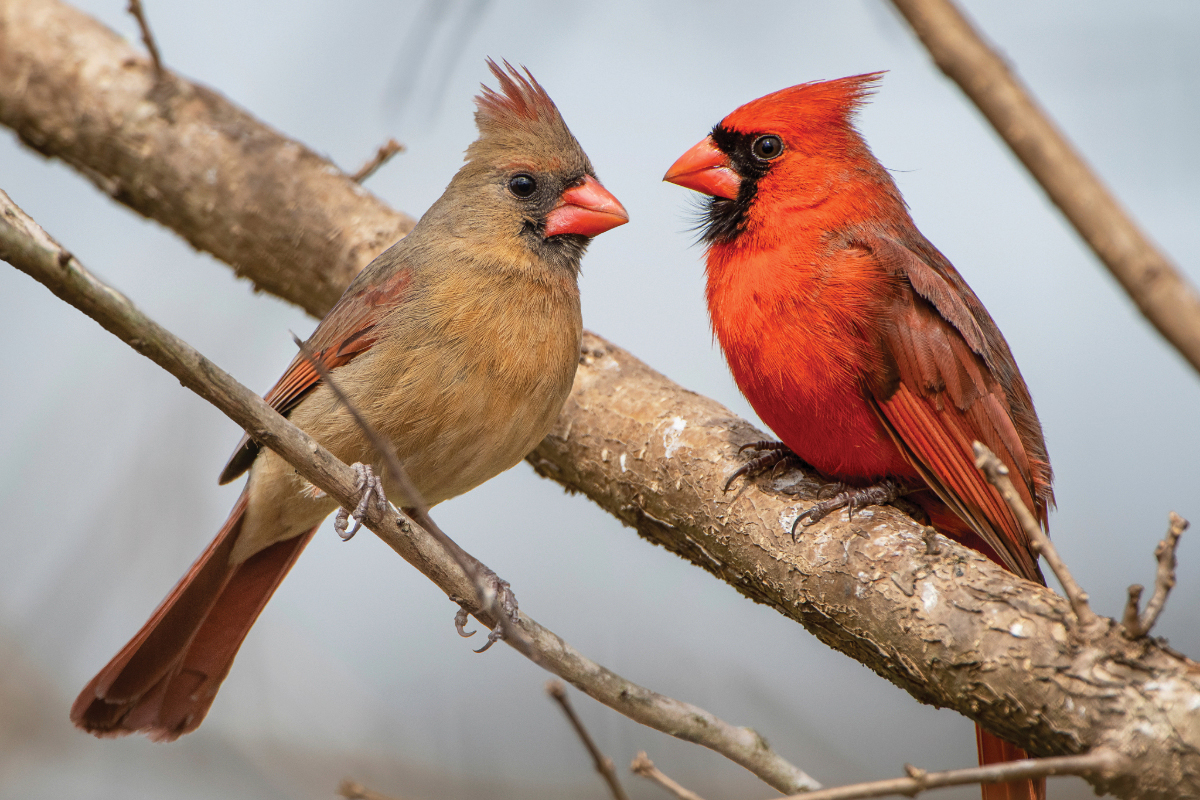
The crest and the thick bill are the two features that separate female cardinals from almost everything else in their range. The only real lookalike is the Pyrrhuloxia of the southwest, which has a shorter, more curved upper bill and grayer plumage.
If you are east of Texas, you probably do not need to worry about that distinction.
You Must Also Like: Why Are the Eastern and Western Meadowlarks Considered Different Species?
A female cardinal on a feeder is unmistakable once you know the shape. She sits hunched over, tail pointed down, and cracks seeds with that heavy bill. House finches are smaller, lack the crest, and have thinner bills. Female grosbeaks are stockier but do not carry the same red tinges.
What Northern Cardinals Eat (And How to Attract Them)?
Cardinals are omnivorous. Their diet includes seeds, fruits, berries, and insects . In the wild, they eat caterpillars, grasshoppers, beetles, and over a hundred kinds of fruits and seeds.
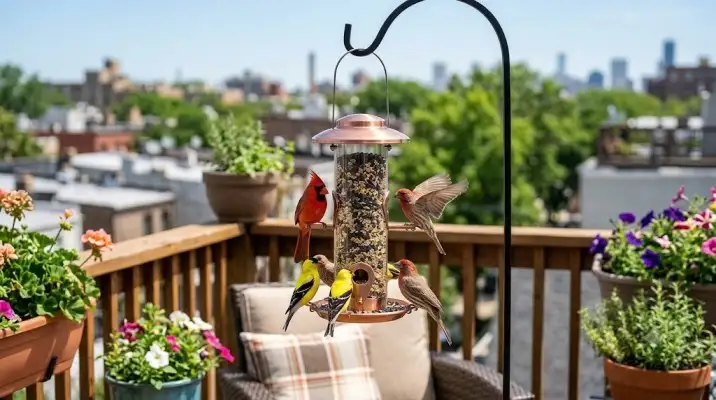
At feeders, black oil sunflower seeds are the top choice. Safflower seeds, millet, cracked corn, peanut butter, nuts, fruit, and mealworms all work. They prefer platform feeders or tray feeders, and they will also eat off the ground.
If you want cardinals in your yard, plant native shrubs and trees. Brambles, sumac, cherry, dogwood, grape, mulberry, blueberry, elderberry, and hackberry all provide food and cover.
Evergreens like Eastern Red Cedar and American Holly give them shelter for roosting and nesting.
One warning: cardinals are fiercely territorial. Both males and females will attack their own reflection in windows and car mirrors during breeding season.
If you see a cardinal repeatedly flying at a window, hang a towel or sunscreen to break the reflection. It looks silly, but it stops the bird from exhausting itself.
Northern Cardinal Nesting Habits: What to Expect?
The female builds the nest, usually with some help from the male. Construction takes three to nine days and uses dry leaves, twigs, grapevine, dry grass, bark, and sticks.
She chooses dense thickets, briars, young evergreens, or vines for protection from weather and predators. Nests often sit near streams, which provide drinking and bathing spots.
Nesting season runs from March through August, with peak activity from April to August depending on the region. The female lays two to five eggs. They can be gray, buff, or light green, with spots of gray and brown. She incubates alone for 12 to 13 days.
The young leave the nest about ten days after hatching. A pair can raise two to four broods in a single season. The male takes over care of the newly fledged young while the female starts incubating the next clutch. That division of labor is one reason cardinals are so successful.
One threat to watch for: Brown-headed Cowbirds. Cowbirds lay their eggs in cardinal nests and destroy the host's young in the process. The cardinals then raise the cowbird chick as their own . It is a brutal system, and cardinals are frequent victims.
What Does a Cardinal Sound Like?
Both males and females sing. That is unusual among North American songbirds . The male's song is a series of clear, repeated whistles. Common descriptions include "what-cheer cheer cheer," "birdy, birdy, birdy," and "purdy purdy purdy".
The call note is a sharp metallic chip, often described as sounding like two coins hitting each other.
The female sings too, sometimes from the nest. Researchers believe her singing may signal to the male whether to bring food . Mated pairs share song phrases, but the female's version can be longer and more complex than the male's.
The Final Thoughts
If you see a crested bird with a thick orange bill and warm reddish patches on a brown body, you have found a female northern cardinal. Do not expect her to look like the male. She is not supposed to.
If you want them in your yard, skip the fancy feeders and buy black oil sunflower seeds. Plant a native shrub or two. Put out a shallow water dish. The cardinals will find you. And if one starts attacking your window in spring, do not panic. It is not sick. It is defending a nest you probably cannot see. Break the reflection and it will stop.
The northern cardinal nesting habits are predictable once you know the schedule. They nest, they raise young, they do it again. All you have to do is stay out of the way and keep the feeder full.